The Mori: Two Provinces and Two Hundred Years of Waiting
Hagi, the two grave temples, and the domain that outlasted the men who cut it down
There are two graveyards in Hagi, at opposite ends of the town, and between them they hold the lords of the Mori house for two and a half centuries. Both are forests of stone lanterns — five hundred at one, six hundred at the other — each one given by a retainer, standing in rows under the cedars.
They are there because the family lost.
Part 1 — The house that was built in one lifetime
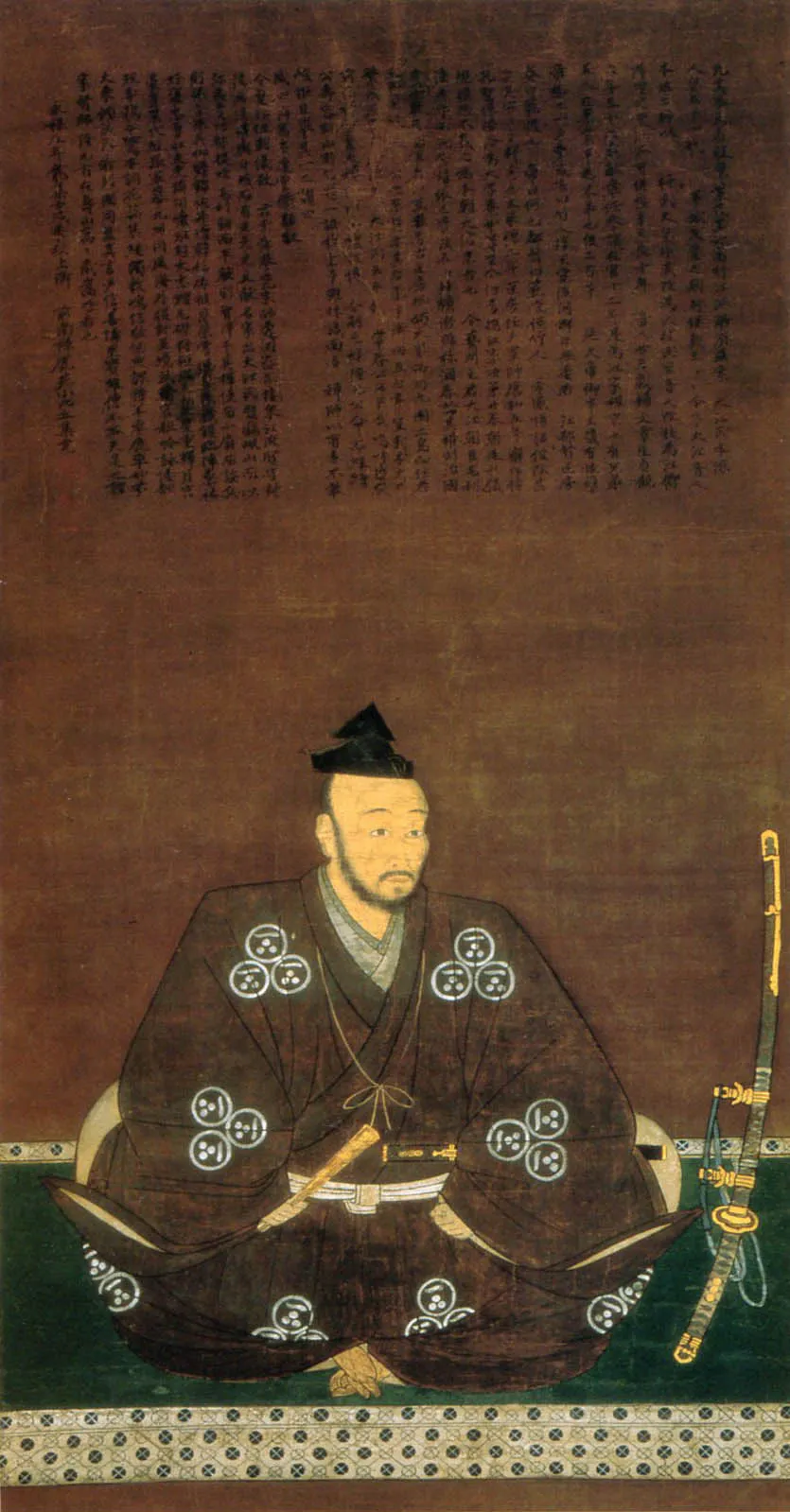
Mori Motonari, in the portrait above, inherited a minor holding in Aki province and finished his life ruling most of western Japan. He took the Ouchi lands, then the Amago lands, and by the 1560s the Mori held something like ten provinces from the Inland Sea to the Japan Sea coast.
He is also the subject of the most repeated parable in Japanese history: the three arrows. One arrow snaps easily; three bound together cannot be broken; his three sons should stand as the three arrows do. It is on the Hiroshima football club’s badge. It is in every children’s book.
It did not happen, at least not that way. What survives is a letter — the Sanshi Kyokunjo, fourteen articles written in 1557 — in which Motonari urges his sons at length to hold together. No arrows are broken in it. The deathbed scene the story depends on is also impossible: his eldest son Takamoto died in 1563, eight years before Motonari did.
Part 2 — The afternoon that cost six provinces
In 1600 the head of the house was Motonari’s grandson, Terumoto. He was named commander-in-chief of the Western army at Sekigahara and spent the battle in Osaka Castle, a day’s ride away, doing nothing at all.
It made no difference. Ieyasu stripped the Mori of six of their eight provinces, leaving Suo and Nagato — the far western tip of Honshu — and about a third of the income. In 1604 Terumoto began building a castle at Hagi, on a delta on the Japan Sea coast, which is to say at the furthest possible corner of what he had left, facing away from Edo.
Hagi Castle Site 萩城跡(指月公園)
Hagi, yamaguchi
The stone base of the keep, which can be climbed, and the moats and walls of the castle Mori Terumoto built in 1604 at the far edge of what was left of his domain.
Getting there: Bus or bicycle from central Hagi. Hagi is about an hour and a quarter by bus from Shin-Yamaguchi.
What to know first: The castle was dismantled at the Meiji Restoration and the grounds are a park. Terumoto is not buried with the later lords at either family temple but at Tenjuin, near the castle.
Part 3 — The two forests of lanterns
The Mori buried their dead on a Chinese system that split the generations. The first lord and the even-numbered ones went to Daishoin, at the southern end of town; the third and the odd-numbered ones to Tokoji, at the northern end. Each grave is surrounded by stone lanterns donated by vassals, and the effect in both places is the same and is difficult to describe without using the word army.
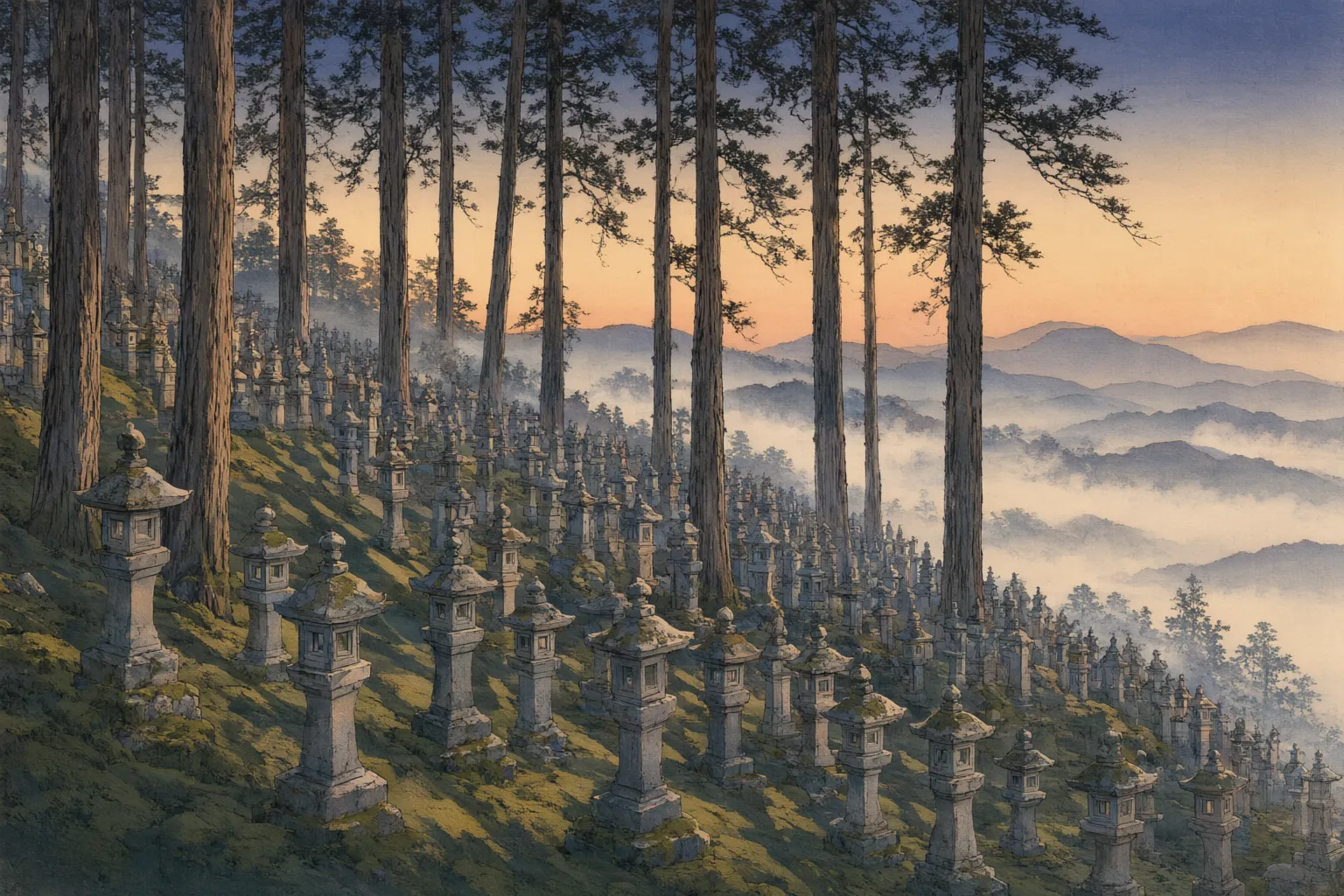
Tokoji is the more visited of the two: an Obaku Zen temple of 1691, built in a Chinese manner that looks like nothing else in the prefecture, with four of its buildings nationally designated.
Toko-ji Temple 東光寺
Hagi, yamaguchi
An Obaku Zen temple founded by the Mori in 1691, its outer gate, main gate, bell tower and main hall all nationally designated, with the graves of the odd-numbered Mori lords behind it among some five hundred stone lanterns given by their vassals.
Getting there: The east side of Hagi, about ten minutes by bus from the centre.
What to know first: The Mori split their dead between two temples on a Chinese system: the odd-numbered generations lie here, the even-numbered ones and the first lord at Daishoin across town. Visiting one is visiting half.
Daishoin Temple 大照院
Hagi, yamaguchi
The other half of the Mori graves — the first lord and the even-numbered generations — under some six hundred stone lanterns.
Getting there: South of the centre near Hagi Station, a short bus ride or a half-hour walk.
What to know first: Much quieter than Toko-ji, which is usually the reason to go rather than a reason to skip it.
Go to both if you can. Going to one is visiting half a family, and the walk or bus between them is the clearest lesson Hagi offers in how a castle town was laid out.
Part 4 — The answer, two hundred and sixty-eight years later
Choshu — the domain the Mori were left with — spent the 1860s doing what no other domain dared. It fired on foreign shipping in the straits and was shelled flat for it by a four-nation fleet in 1864. It was attacked by a shogunal army in 1866 and won. It made a secret alliance with Satsuma, the other great southwestern domain held at arm’s length since 1600, and in 1868 the two of them ended the Tokugawa shogunate.
The men who ran the new government were overwhelmingly from here. Hagi is a small town on a delta, a long way from anywhere, and for about thirty years it produced the people who rebuilt the Japanese state.
Check rooms in Hagi for your dates
Part 5 — Fact and legend
The three arrows: retold. Covered above. The letter is real and better than the legend, because fourteen articles of a father’s anxiety tell you more than a snapped stick does.
“Has the time come yet?”: retold, and very enjoyable. The story goes that every New Year a Mori retainer would ask the lord whether the time had come to move against the Tokugawa, and the lord would answer that it had not. Two hundred and sixty-eight years of this, until one year the answer changed. There is no contemporary record of it. It appears in the nineteenth century, when Choshu had every reason to want a long memory, and it is repeated now as though somebody wrote it down in 1601.
Documented, and stranger than either: Terumoto is not with them. The man who lost the provinces and founded the town is buried at Tenjuin, near the castle, and not in either of the two temples where his descendants lie in their hundreds of lanterns.
On the ground: the castle is a stone base. Hagi Castle was dismantled after the Meiji Restoration — by the government the domain’s own men had just created — and what is in Shizuki Park is the foundation, the moats and the walls. The climb up the keep base is worth it; there is no keep.
Before you go
Tokoji is open 8:30 to 17:00 every day and costs 300 yen. Daishoin is 200 yen and keeps similar hours, closing earlier in winter — and it is the one people run out of time for, because it is at the other end of town.
That geography is the thing to plan around. Tokoji sits near Higashi-Hagi station, which is also where the castle, most of the old samurai quarter and nearly all of the bookable inns are. Daishoin is near JR Hagi station, fifteen minutes on foot or two minutes on the loop bus. Hagi is flat and the loop bus is cheap, so the whole route works on foot and wheels in a day.
Getting there at all is the harder part: Hagi is about an hour and a quarter by bus from Shin-Yamaguchi, which is the Shinkansen stop. It is not a detour you make by accident, which is a large part of why the town still looks the way it does.
Where to Stay: Hagi Onsen
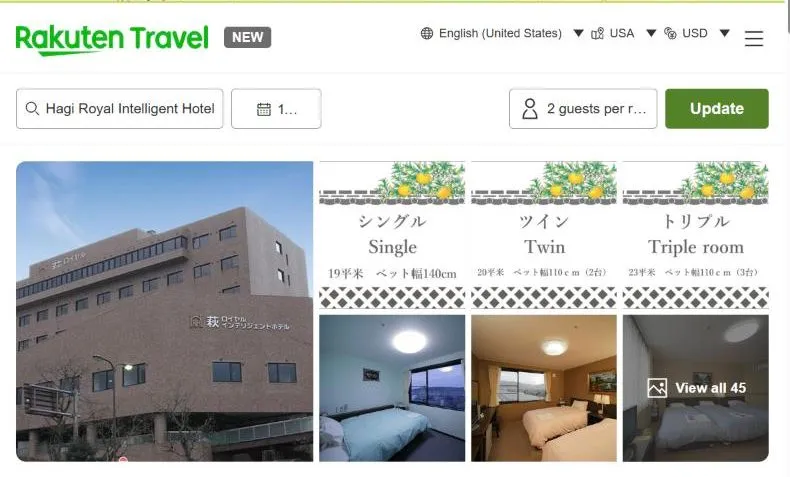 Hagi Royal Intelligent Hotelfrom $80
The value pick and the one with no walk at all: it is on Higashi-Hagi station, which is the end of town the castle, Tokoji and most of the ryokan are at. A business hotel, scored 4.1 across ninety-seven reviews, at a third of what the onsen inns cost.
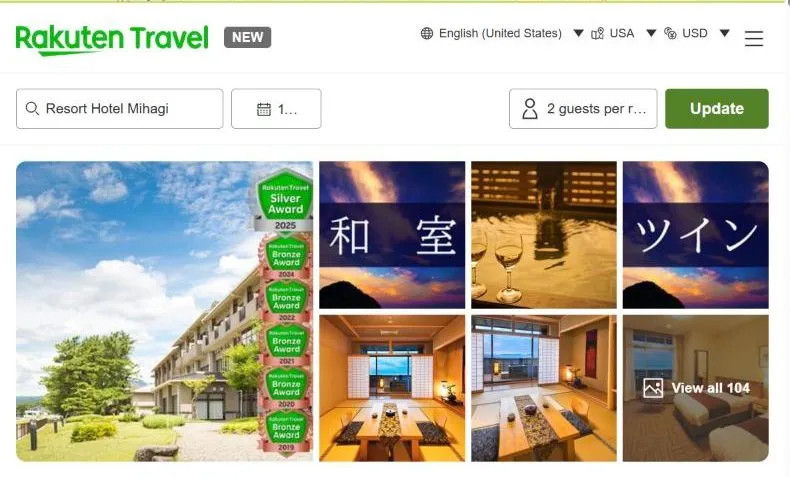 Resort Hotel Mihagifrom $188
The best-evidenced score in Hagi — 4.2 from a hundred and twenty-two reviews, far more than any of the ryokan have — and a hot spring of its own. Twenty-four minutes on foot, so plan on the loop bus or a taxi.
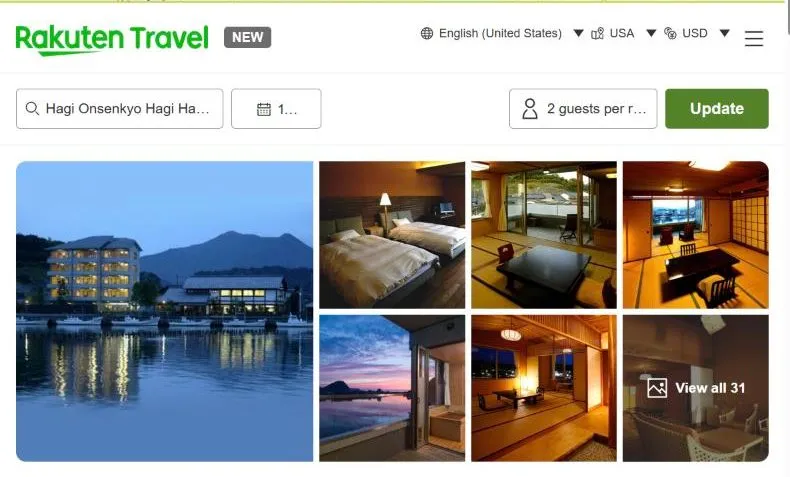 Hagi Onsenkyo Hagi Hakkei Ganjima Bessofrom $415
The splurge, and the one actually on the water: a ryokan of the Hagi Onsenkyo group looking out at the river mouth, ten minutes from the station. The 4.6 rests on only twenty-two reviews, so treat it as promising rather than proven.
Inn images are screenshots of each inn's own page on Rakuten Travel, captured 2026-10-27. The photographs in them belong to the inns; pages and prices change.
The other 3 inns in Hagi Onsen
Prices are the lowest seen for two people, one night, on 2026-12-11, checked 2026-10-26. They move with the date — treat them as a rough floor, not a quote. Japanese inns are listed under romanised names that often differ from the signs outside them, so these link straight to the inn rather than to a search. What the booking page looks like.
See what is available in Hagi Onsen
6 inns were bookable in English on the date checked. Availability shifts: a check four months earlier returned a partly different list, so this is what was open then rather than a fixed roster. Availability moves quickly at smaller inns, and weekends book out first.