Tokugawa Ieyasu: The Shogun Who Retired and Kept Ruling
Sunpu, Kunozan, and the hot spring he sent home in barrels
Tokugawa Ieyasu was shogun for two years. He took the title in 1603, three years after winning at Sekigahara, and handed it to his son Hidetada in 1605.
He then governed the country for eleven more years from a castle a hundred and forty kilometres away from the capital he had built.
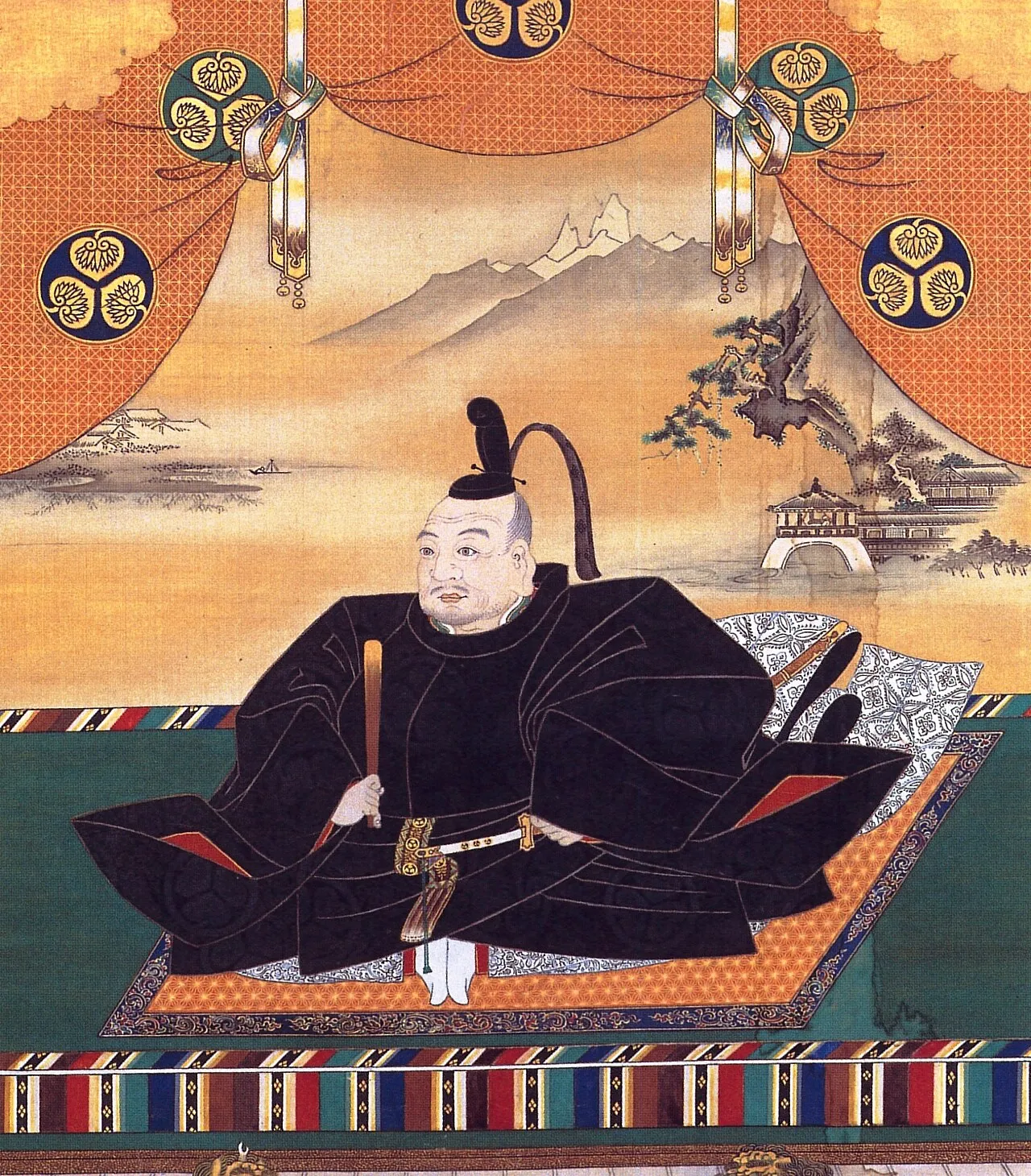
The resignation was the point. A shogun who dies in office leaves a succession to be fought over; a shogun who resigns in favour of his son while still alive, and keeps every lever in his own hands, has demonstrated that the office is hereditary and that arguing about it is pointless. Ieyasu spent the rest of his life being the proof.
The place he did it from is the part the guidebooks skip.
Part 1 — Sunpu: the retirement that was not one
He went back to Suruga, and specifically to Sunpu, which is central Shizuoka today. He knew it: he had been sent there as a child hostage of the Imagawa and spent most of his boyhood in the town. The man who came back in 1607 held the country.
The title he took was ogosho — retired shogun. What it meant in practice was two governments. Hidetada held the office in Edo and the paperwork of routine administration. Ieyasu held foreign policy, the treasury, the sword smiths, the mines, the shipbuilding and the question of what to do about the Toyotomi at Osaka, which he settled in 1615 by destroying them.

Sunpu Castle Park 駿府城公園
Shizuoka, shizuoka
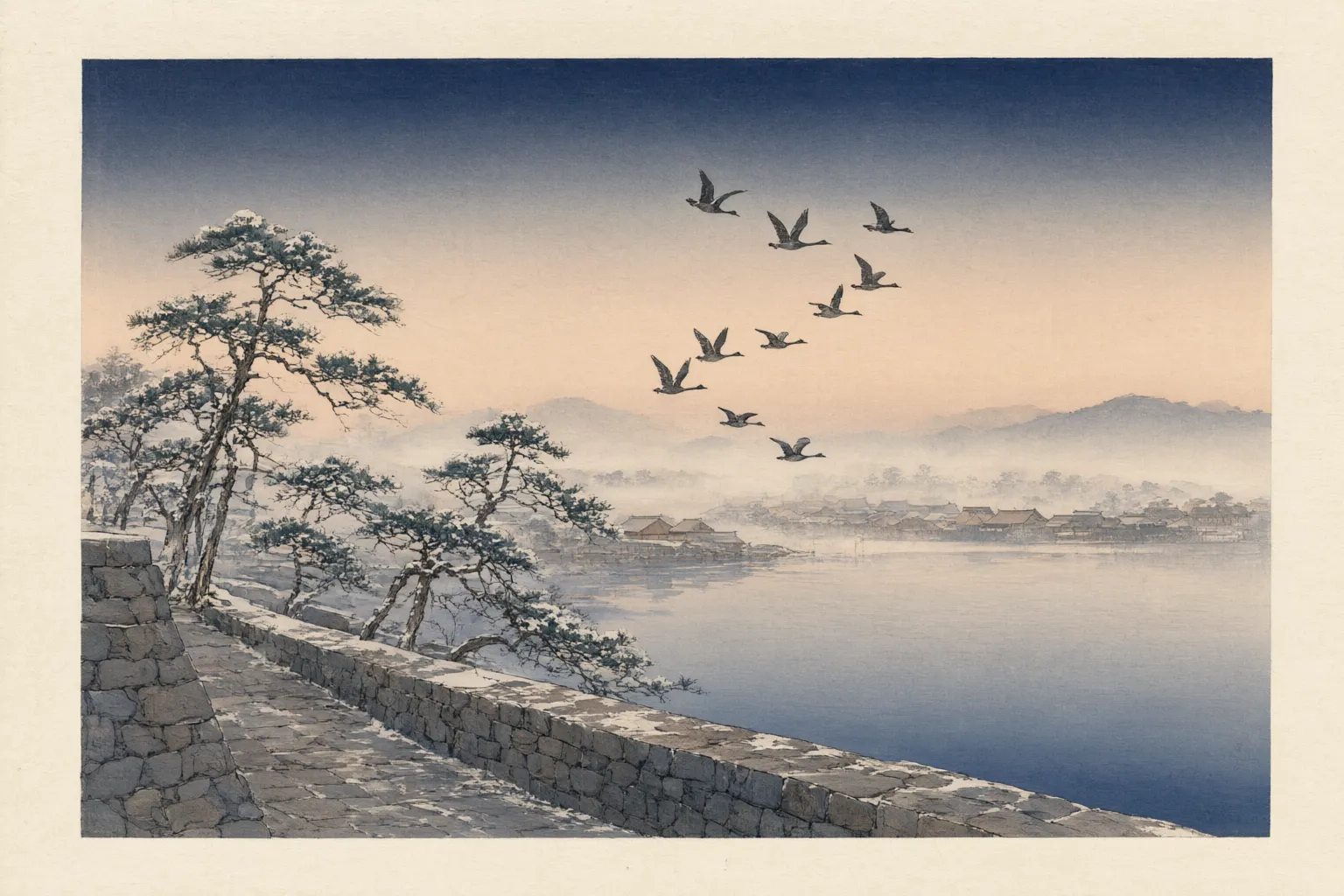
The moats and stone walls of the castle Ieyasu retired to and went on ruling from, with the east gate and the Tatsumi turret rebuilt, and the keep foundation — among the largest ever built in Japan — under the construction of a permanent outdoor display.
Getting there: Fifteen minutes on foot from JR Shizuoka Station, twelve from Shin-Shizuoka. The park itself is open and free; the rebuilt buildings keep their own hours, roughly 9:00 to 16:30 with last entry at 16:00, and close on Mondays. There is no visitor parking.
What to know first: The excavation closed to visitors on 26 December 2025, along with the Kyasshuru information centre, while a permanent display of both the Tensho and Keicho keep foundations is built over it. Shizuoka city plans to reopen in spring 2027 at the earliest. The city's own page still reads as though the dig were open, so nearly every guide repeats it: check before building a visit around the stonework.
What you are standing in is a park with its moats intact, two reconstructed pieces of woodwork, and a hole in the ground that you currently cannot look into.
That hole is the keep foundation, among the largest ever built in Japan, pulled down and built over within a few decades of Ieyasu’s death and dug out again from 2016. For nine years you could walk out over it on a viewing deck. It closed to visitors on 26 December 2025, along with the Kyasshuru information centre, while a permanent outdoor display is built over the stonework — one that will show both the Tensho-era foundation and the Keicho-era one that replaced it. Shizuoka city is planning to reopen it in spring 2027 at the earliest.
Almost nothing online says so. The city’s own page still reads as though the dig were open, and the travel sites copy the city, so you will find current articles recommending a viewing deck that has been shut for most of a year. If the stonework is why you were going, wait for 2027.
What is open is the better half of the argument anyway: nothing is being rebuilt on top of it. No concrete keep is going up at Sunpu, which is rarer in Japanese castle towns than it should be, and the moats and the walls and the sheer size of the thing read perfectly well from ground level.
Part 2 — Kunozan: where they put him first
He died at Sunpu in the fourth month of 1616, aged seventy-three. Within a day his body went up the headland at Kunozan, by his own instruction, and the shrine over the grave was finished the following year.
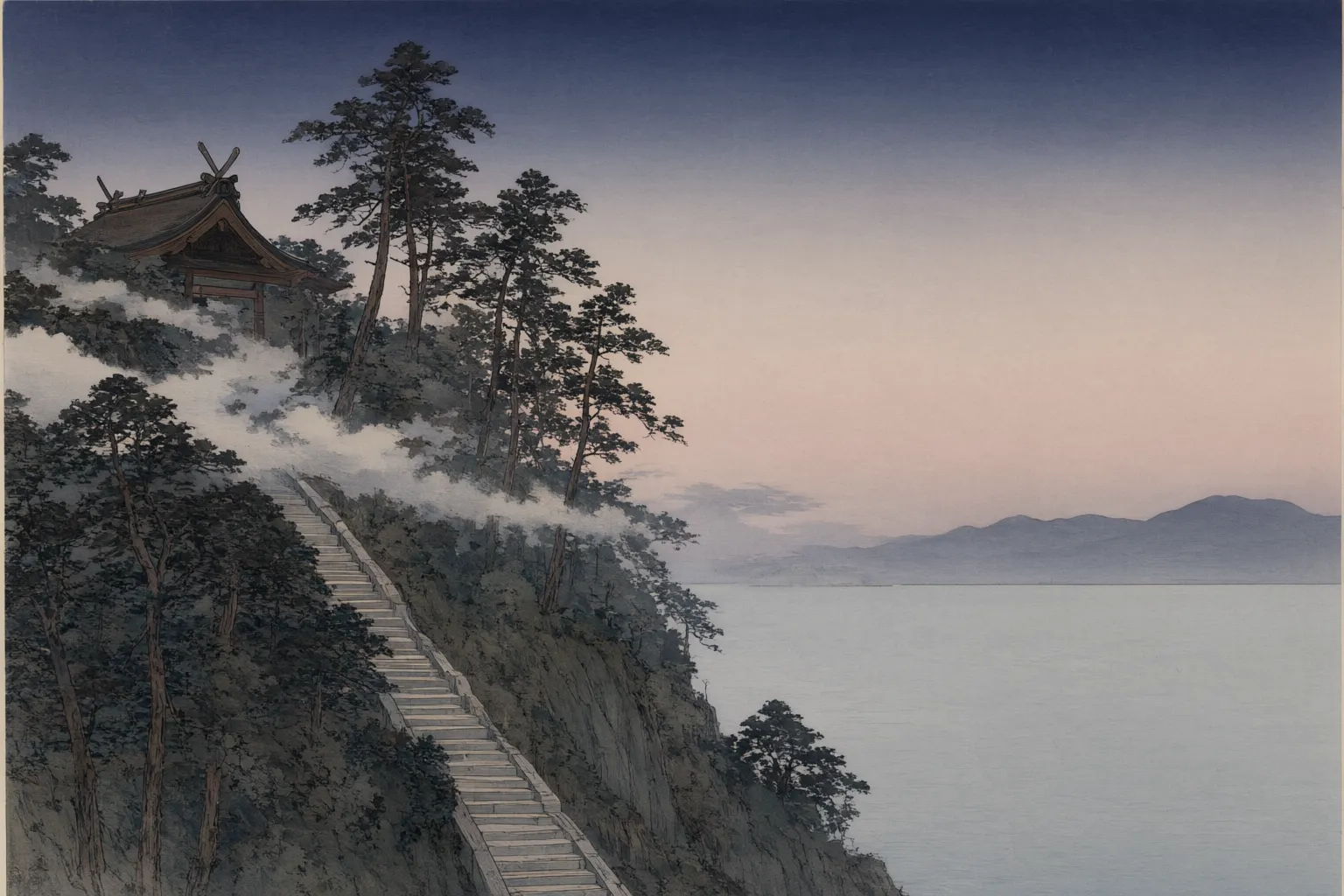
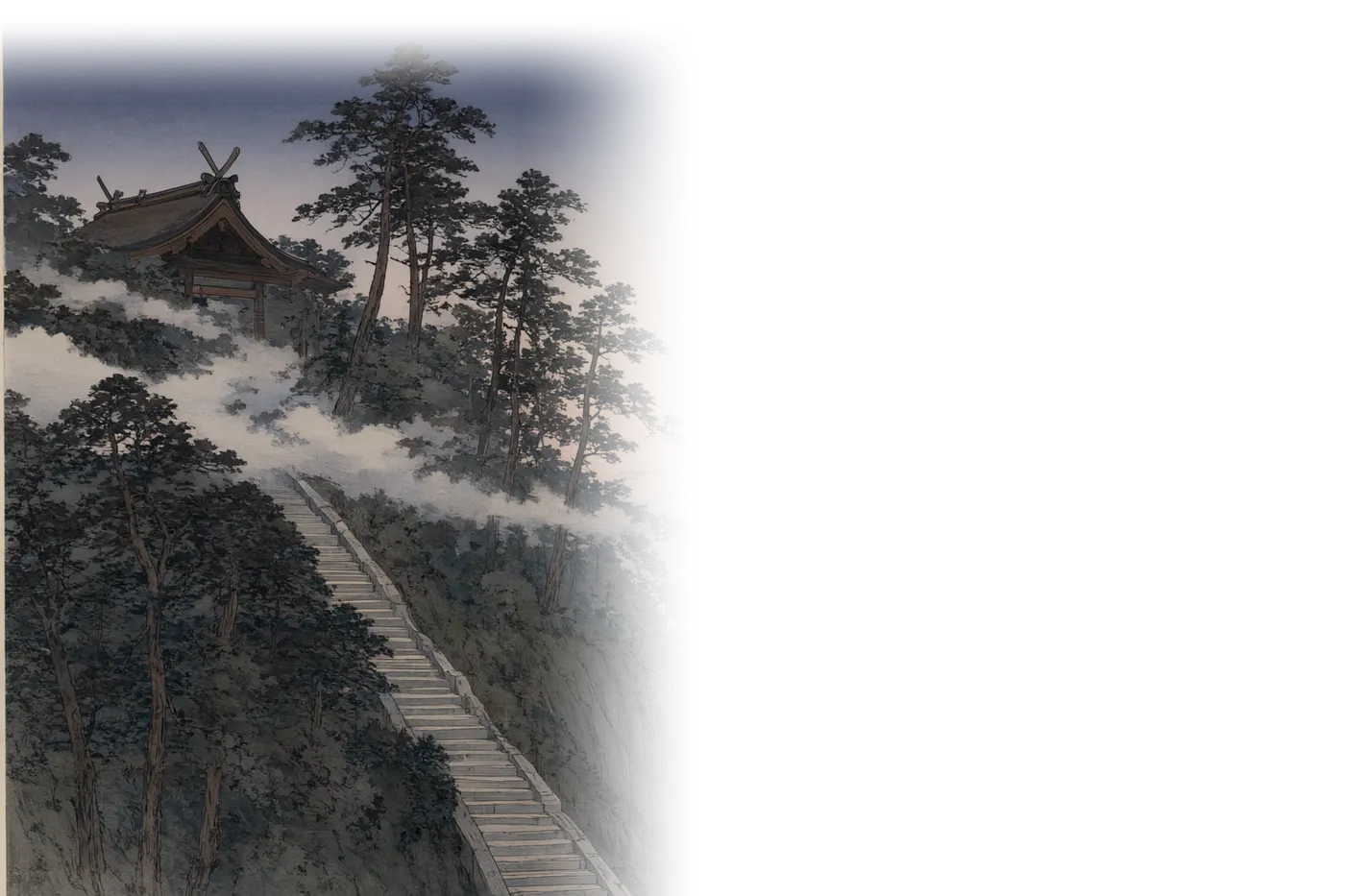

It is the earliest of the Toshogu shrines and, to a lot of people who have seen both, the better one. Nikko is the famous one and it is enormous; Kunozan is small, dense, and sits on a cliff over Suruga Bay with the sea on three sides. The black lacquer and the colour are the same workshop and the same decade.
Kunozan Toshogu 久能山東照宮
Shizuoka, shizuoka
The shrine raised over Ieyasu's grave within a year of his death in 1616 — main hall, stone chamber and worship hall, in black lacquer and colour, above the sea at the top of a long stair.
Getting there: Bus from JR Shizuoka Station to the Nihondaira ropeway, about forty-five minutes, then five minutes on the ropeway. Or 1,159 stone steps from Kunozan-shita, about twenty minutes of climbing. Open 9:00 to 17:00 all year with no closing days, last entry ten minutes before; 700 yen for the shrine, 1,200 with the museum.
What to know first: The last ropeway up leaves Nihondaira at 16:45 and the last one down leaves Kunozan at 17:00. Miss it and the way off the mountain is the 1,159 steps, in the dark, to a bus stop with a thin service. Separately: whether Ieyasu is still here is a three-hundred-year argument. Iemitsu moved the grave to Nikko the year after the burial; Kunozan holds that only part of the spirit went and the body did not. Both shrines are visited as the burial place.
Part 3 — The two-day route
Sunpu in the morning, Kunozan in the afternoon, Atami that night. Shizuoka to Atami is about forty minutes on the Tokaido line, and Atami is fifty minutes from Tokyo on the Shinkansen, which means the whole thing works as a weekend out of the capital rather than a trip you have to build a holiday around.
Check rooms in Atami for your dates
Part 4 — Fact and legend
Three things get repeated about Ieyasu and this coast. One is documented, one is partly documented, and one is an argument that has been running for four hundred years.
The argument: where he actually is. Kunozan holds that Ieyasu is buried on the mountain and never left it. Nikko holds that his remains were moved there in 1617, a year after the burial, on the instruction he is said to have given before dying. Both are working shrines, both are visited as the grave, and the sources that would settle it do not. What is certain is that the body went to Kunozan first and that something went to Nikko afterwards. Whether that something was a body or a spirit is the part nobody can show you.
Partly documented: the hot spring in barrels. Atami water was carried to Edo Castle as tribute — the practice has a name, o-kumiyu, and the records of it are real. The eighth shogun Yoshimune is recorded ordering some three thousand six hundred barrels over eight years in the 1720s and 30s. What those records do not show is Ieyasu starting it. The regular shipments belong to his descendants, two generations and more after him.
Told everywhere, sourced nowhere I could find: the seven days. Every tourism page in Atami will tell you Ieyasu stayed seven days in 1604 and afterwards ordered the water sent to Edo. It may well be true. I could not find a primary record for it, and the barrels that are documented belong to later shoguns, so treat the seven days as a good story about a real habit rather than as a fact about Ieyasu.
That distinction matters more here than it would elsewhere, because the whole reason to end this route in Atami is the hot spring, and the hot spring’s claim on Ieyasu is the weakest documented thing in this article.
Before you go
Kunozan is open nine to five every day of the year, with last entry ten minutes before; seven hundred yen for the shrine, twelve hundred with the museum. Getting there is either the ropeway from Nihondaira — about forty-five minutes by bus from Shizuoka Station, then five minutes in the car — or the 1,159 stone steps up from Kunozan-shita, which take about twenty minutes of honest climbing and give you the view back down that the ropeway does not.
The last ropeway up leaves Nihondaira at 16:45 and the last one down leaves Kunozan at 17:00. Miss it and your way off the mountain is those 1,159 steps in the dark, to a bus stop with a thin service. Go in the morning.
Sunpu Castle Park is free and open; the rebuilt east gate and Tatsumi turret are not, keeping roughly nine to half past four with last entry at four, and closing on Mondays. There is no visitor parking at all, so arrive on foot from either station or use a paid lot nearby.
Atami is the easiest base on this site to book in English — a hundred and eight properties were available for a December Friday when this was checked — and the easiest to get wrong. It is a resort town that boomed, emptied, and is filling up again, which means the range runs from genuinely good ryokan to tired concrete. The three below are picked from what is bookable, and the reasons are given.
Where to Stay: Atami Onsen
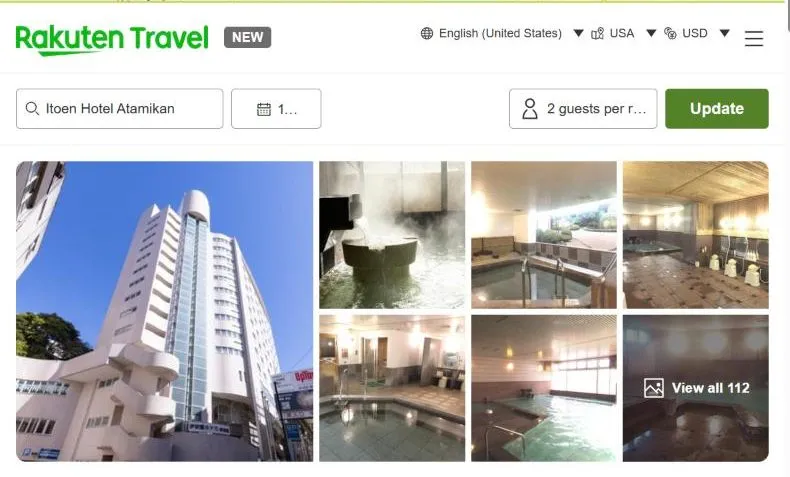 Itoen Hotel Atamikanfrom $100
The value pick, and the only one of these you can walk to with a bag. A big old hot-spring hotel rather than a ryokan, scored 3.5 across a hundred and forty-nine reviews, at a price that makes Atami look like the bargain it stopped being decades ago.
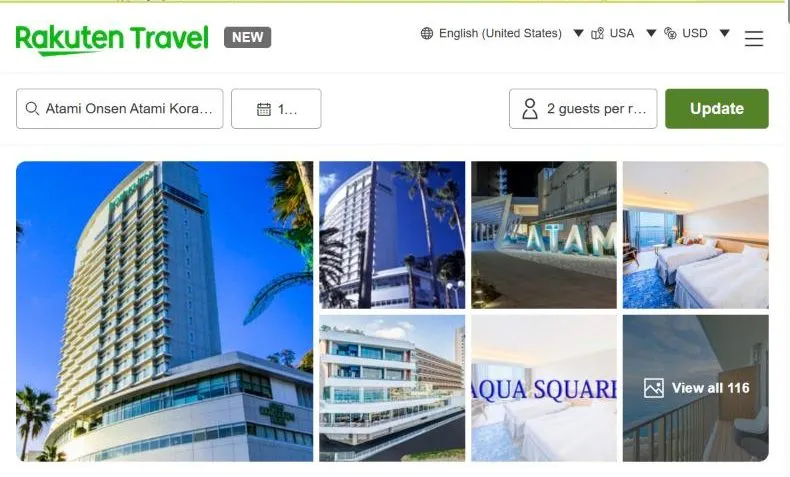 Atami Korakuen Hotelfrom $393
The safe large-hotel choice: 4.4 across a hundred and sixty-one reviews, sea-facing, breakfast included. Twenty-four minutes on foot from Kinomiya, so plan on a taxi from Atami Station.
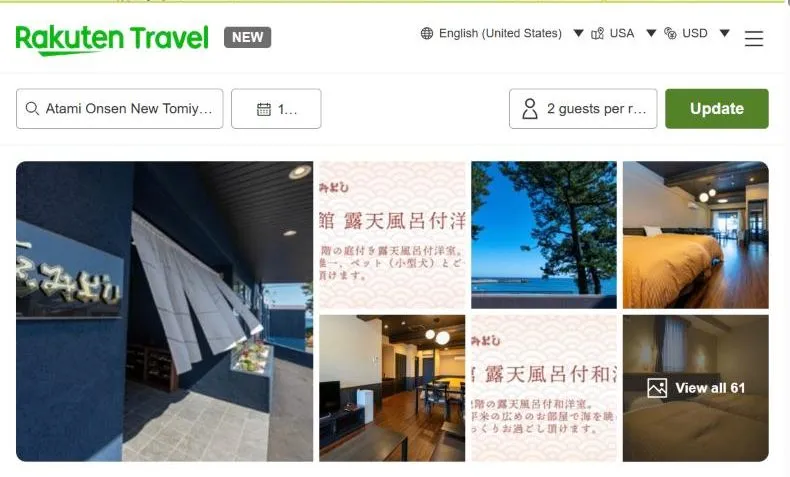 New Tomiyoshifrom $425
The best-evidenced score in Atami — 4.7 from two hundred and eighty-three reviews — and the one to book if the bath is the reason for the trip. Izu-Taga is a stop down the line from Atami, which is why it is quieter.
Inn images are screenshots of each inn's own page on Rakuten Travel, captured 2026-10-27. The photographs in them belong to the inns; pages and prices change.
The other 3 inns in Atami Onsen
Prices are the lowest seen for two people, one night, on 2026-12-11, checked 2026-10-26. They move with the date — treat them as a rough floor, not a quote. Japanese inns are listed under romanised names that often differ from the signs outside them, so these link straight to the inn rather than to a search. What the booking page looks like.
See what is available in Atami Onsen
6 inns were bookable in English on the date checked. Availability shifts: a check four months earlier returned a partly different list, so this is what was open then rather than a fixed roster. Availability moves quickly at smaller inns, and weekends book out first.