The Sanada: A Family That Took Both Sides
Ueda, Matsushiro, and the decision made at a crossroads in 1600
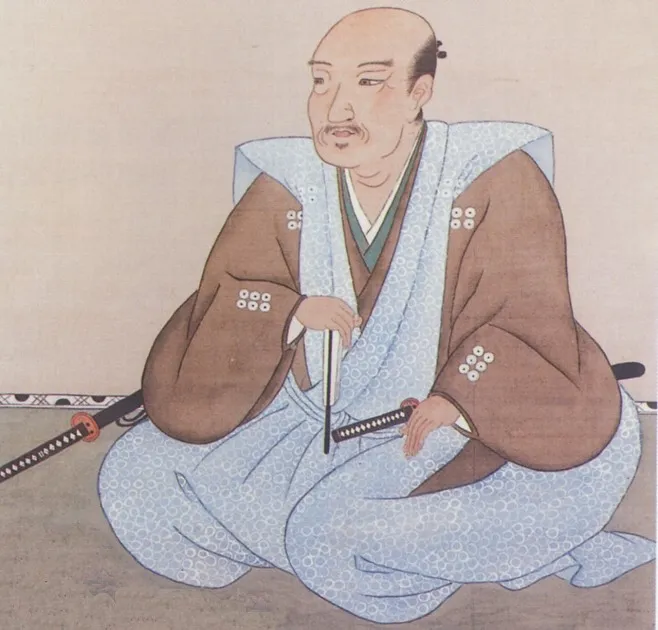
In the summer of 1600, with the country about to divide, Sanada Masayuki and his two sons stopped at a place called Inubushi and decided to fight on opposite sides.
The elder son, Nobuyuki, was married to a daughter of Tokugawa Ieyasu’s household and went east. The father and the younger son, Nobushige — the man later ages would call Yukimura — went west. Whoever won, there would still be Sanada.
It worked, which is the remarkable part. Most families that tried this were destroyed anyway.
Part 1 — Ueda, where they beat a Tokugawa army twice
The castle at Ueda is small and it stopped two invasions. In 1585 Masayuki held it against a Tokugawa force several times his strength. In 1600, on the way to Sekigahara, he did it again — this time delaying Tokugawa Hidetada and some thirty-eight thousand men long enough that they missed the battle entirely.
Ieyasu did not forgive it. After the war the castle was dismantled and the Sanada of that branch exiled.
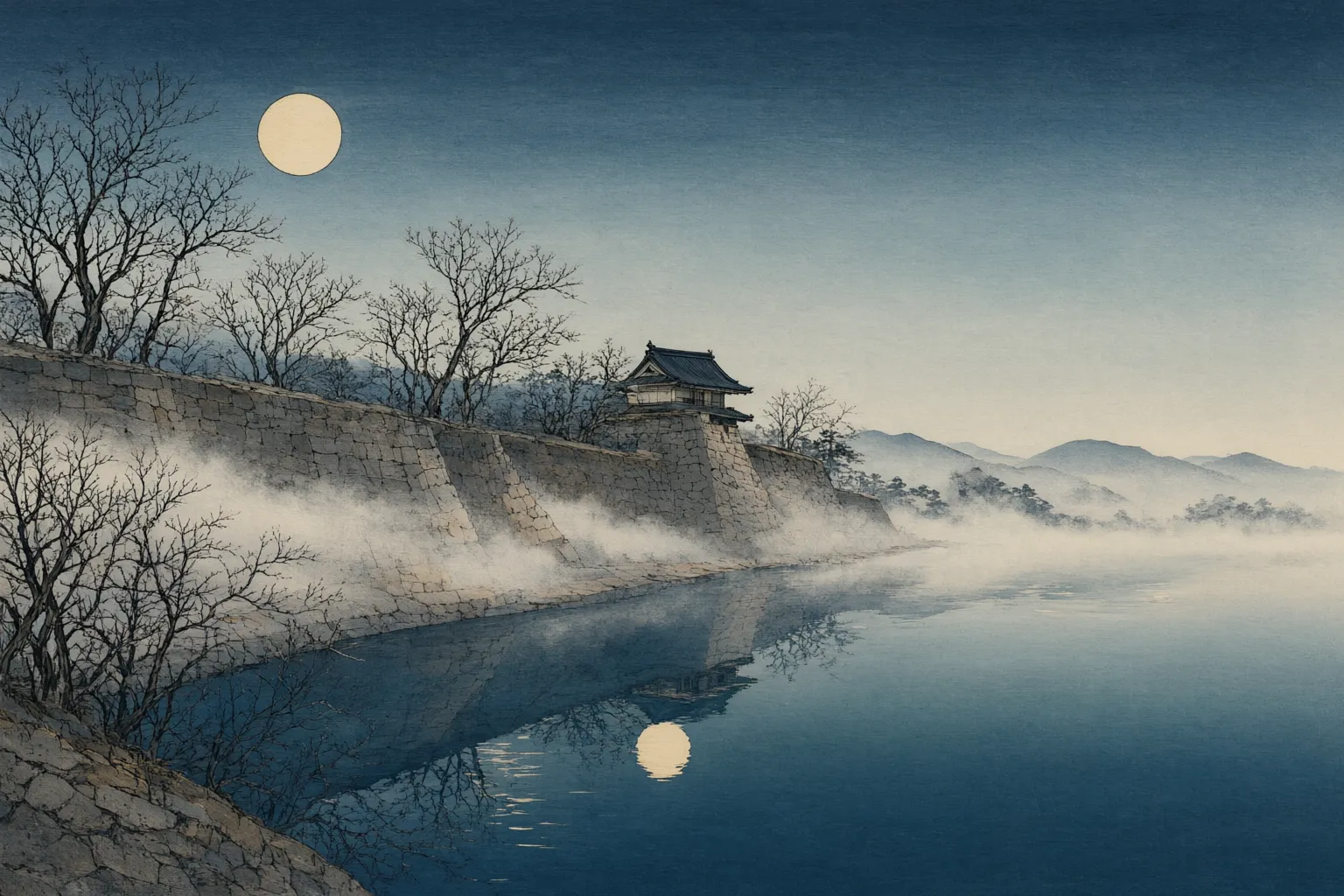
Ueda Castle Site 上田城跡
Ueda, nagano
The stone walls and earthworks of the castle that held off a Tokugawa army twice, with Sanada Shrine standing in the inner bailey.
Getting there: Twelve minutes on foot from Ueda Station, on the Hokuriku Shinkansen. The park is free and always open; the turrets and the city museum share a ticket of about 500 yen, 9:00 to 17:00 with last entry at 16:30, closed Wednesdays and the day after a public holiday.
What to know first: The turret gate shuts for the winter, from the middle of November until March, while the park and the stonework stay open. And the three turrets and the gate are twentieth-century reproductions in any case: the castle was dismantled after Sekigahara because Masayuki had backed the losing side, so the stonework survives and the silhouette does not.
What stands now is stone, earth and three reproduction turrets. The park is free and the ground tells the story on its own: the castle sits on a bluff over a river, and the approach a besieging army must take is visible from where you are standing.
Part 2 — Matsushiro, where the other branch spent the next 250 years
Nobuyuki, the son who went east, was rewarded. His line was moved to Matsushiro near Nagano in 1622 and held it until the domains were abolished in 1871 — which is to say that the Sanada ended as one of the longest-serving daimyo houses in the country, through the decision taken at that crossroads.
Matsushiro Castle and the Sanada Residence 松代城跡・真田邸
Nagano (Matsushiro), nagano
Stone foundations, walls, gates and moat of the castle the Sanada held until 1871, with the Sanada residence and its garden beside it, and the domain school still standing.
Getting there: Bus from Nagano Station to Matsushiro, about thirty minutes; the sites are walkable from one another. The Sanada residence and the domain school are about 400 yen each and open 9:00 to 16:30, closing at 16:00 from November through March. The Sanada treasure museum is a separate ticket and shuts on Tuesdays. Published combined-ticket prices disagree, so buy on arrival rather than planning around a figure.
What to know first: The keep is gone; the town is what makes the trip, not the castle. The Bunbu school is the only one of more than two hundred and fifty domain schools to survive essentially entire.
Matsushiro is the better town and the worse-known one. The castle itself is foundations and gates, but the Sanada residence survives with its garden, and the domain school — a working school of swordsmanship and letters — is the only one of more than two hundred and fifty such schools to come down to us essentially entire.
Part 3 — Where to sleep
Check rooms in Bessho for your dates
Bessho is a half hour from Ueda on a branch line, and the inns are a few minutes’ walk from its station — which makes this one of the few routes on this site that works properly without a car.
Part 4 — Fact and legend
The crossroads: documented in outline, dramatised in detail. That the family split, and roughly when and where, is accepted. The scene as it is usually told — the three of them in a room at Inubushi arguing through the night — is the version the Edo-period chronicles and every drama since have given it. Treat the decision as fact and the dialogue as theatre.
“Yukimura”: not his name. He signed himself Nobushige. The name Yukimura appears after his death, in the war tales and the popular literature that made him the hero of the siege of Osaka, and it is now so established that using the correct one looks like a mistake. The museum labels in Ueda will tell you this too, quietly.
The red armour and the Six Coins: real, and heavily merchandised. The rokumonsen crest — the six coins paid as a ferry toll to cross the river of the dead — is genuinely the Sanada mon, and it is on every manhole cover and keyring in Ueda. The red armour is attested for the Osaka campaign.
Hidetada’s thirty-eight thousand: the number moves. The figure for the army Masayuki delayed in 1600 varies between accounts. What is not in dispute is the outcome, because the shogun’s heir arrived at Sekigahara after the battle had been decided, and the political consequences of that lasted the rest of his life.
Before you go
Ueda’s turrets and city museum share a ticket of about 500 yen, open 9:00 to 17:00 with last entry at 16:30, closed Wednesdays and the day after a public holiday. The turret gate shuts from mid-November until March, while the park and the walls stay open and free — so a winter visit sees the castle but not the inside of it.
Matsushiro is half an hour by bus from Nagano station, and the residence and the school are about 400 yen each, 9:00 to 16:30 and an hour earlier from November through March. The treasure museum is a separate ticket and closes on Tuesdays. The published combined prices contradict each other, so buy at the door.
Ueda and Nagano are twelve minutes apart on the Shinkansen, which makes the two halves of this family a comfortable day each, with Bessho in between to sleep.
Where to Stay: Bessho Onsen
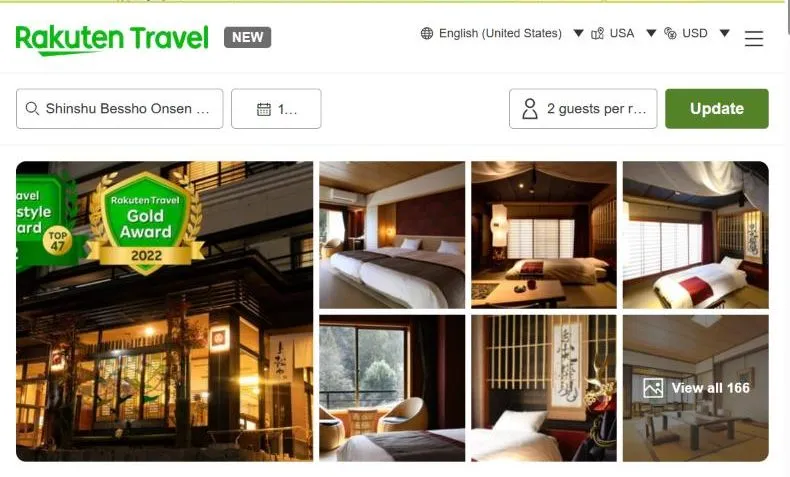 Shinshu Bessho Onsen Uematsuyafrom $144
The value pick and the best-evidenced score in the village: 4.5 across a hundred and forty-two reviews, where most of the inns here rest on twenty. Nine minutes from the station on foot.
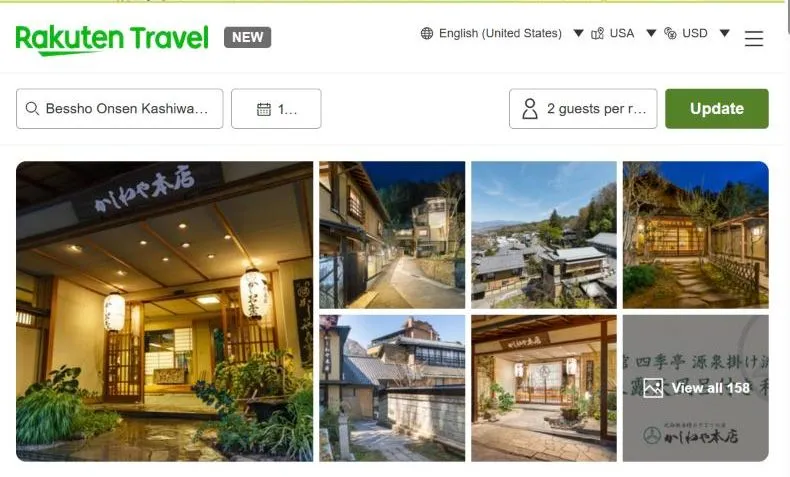 Kashiwaya Hontenfrom $425
The old house of the village, closest thing here to the full ryokan evening, 4.7 across nineteen reviews. Expensive, and the reviews are few enough that it is promising rather than proven.
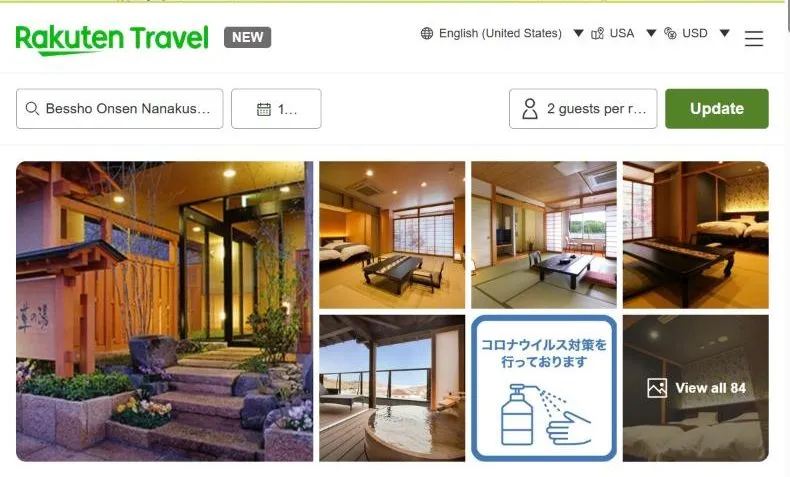 Nanakusa no Yufrom $462
The highest score in the village, 4.8 from twenty-three reviews, and the splurge. Book this one if the bath is the reason for the night.
Inn images are screenshots of each inn's own page on Rakuten Travel, captured 2026-10-27. The photographs in them belong to the inns; pages and prices change.
The other 4 inns in Bessho Onsen
Prices are the lowest seen for two people, one night, on 2026-12-11, checked 2026-10-26. They move with the date — treat them as a rough floor, not a quote. Japanese inns are listed under romanised names that often differ from the signs outside them, so these link straight to the inn rather than to a search. What the booking page looks like.
See what is available in Bessho Onsen
7 inns were bookable in English on the date checked. Availability shifts: a check four months earlier returned a partly different list, so this is what was open then rather than a fixed roster. Availability moves quickly at smaller inns, and weekends book out first.