The Ouchi: The Kyoto of the West
Yamaguchi, a national treasure just out of its scaffolding, and a garden attributed to a painter
Yamaguchi is a quiet prefectural capital of under two hundred thousand people. For about a century it was the most cosmopolitan city in Japan.
The Ouchi ran the western end of Honshu from here, and they ran the trade with Ming China and with Korea that came with it. When Kyoto burned in the Onin War the court painters, the poets and the monks came west, and the Ouchi paid for them. Francis Xavier came too, in 1551, and was given a disused temple to preach from.
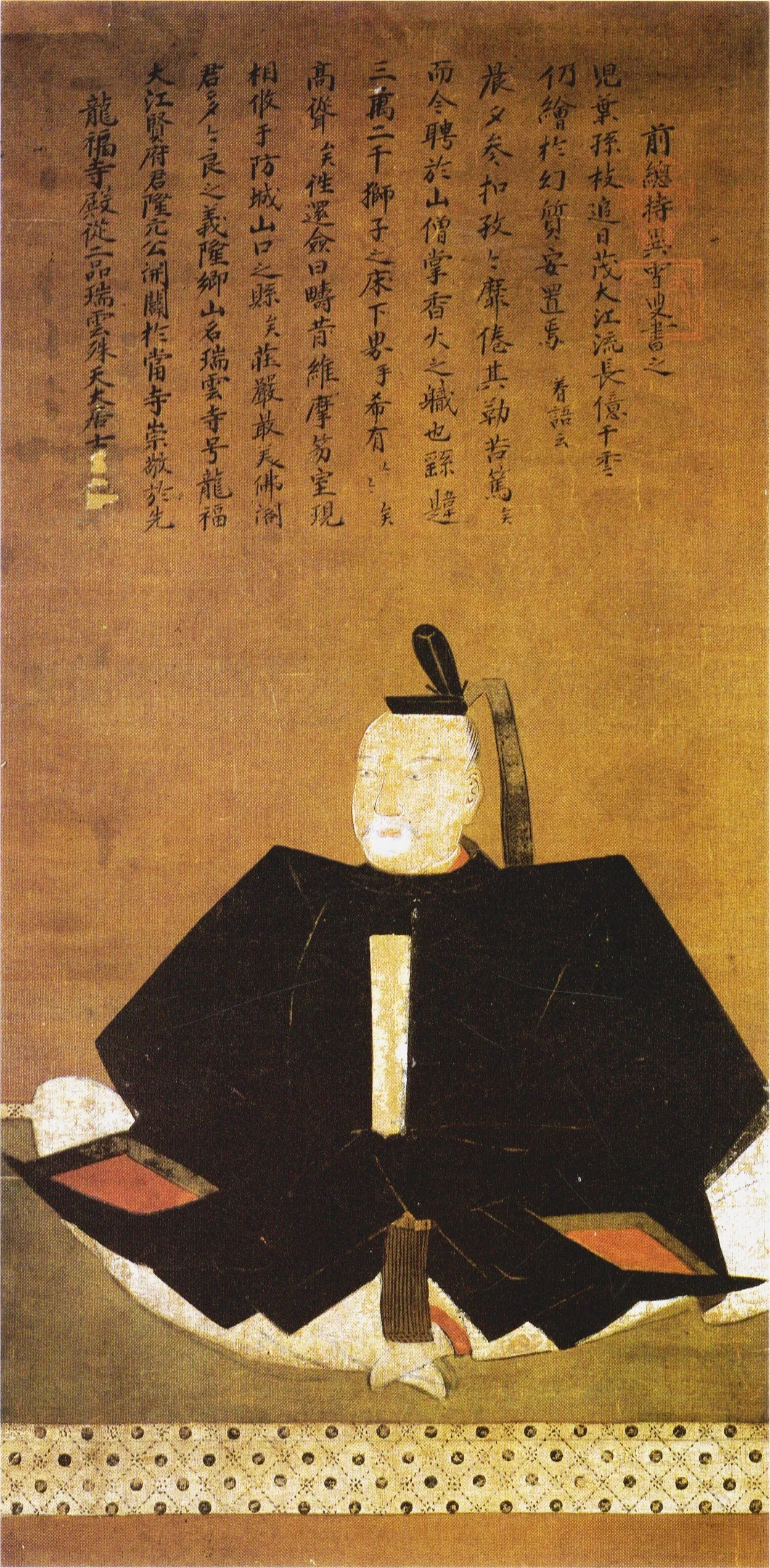
The man above paid for most of it, and he is the reason it ended.
Part 1 — A pagoda that has just been re-roofed
The five-storey pagoda at Rurikoji went up around 1442, in mourning for Ouchi Yoshihiro, who had died in revolt against the shogun. It is a national treasure and Japan ranks it with Horyuji’s and Daigoji’s as one of the three.
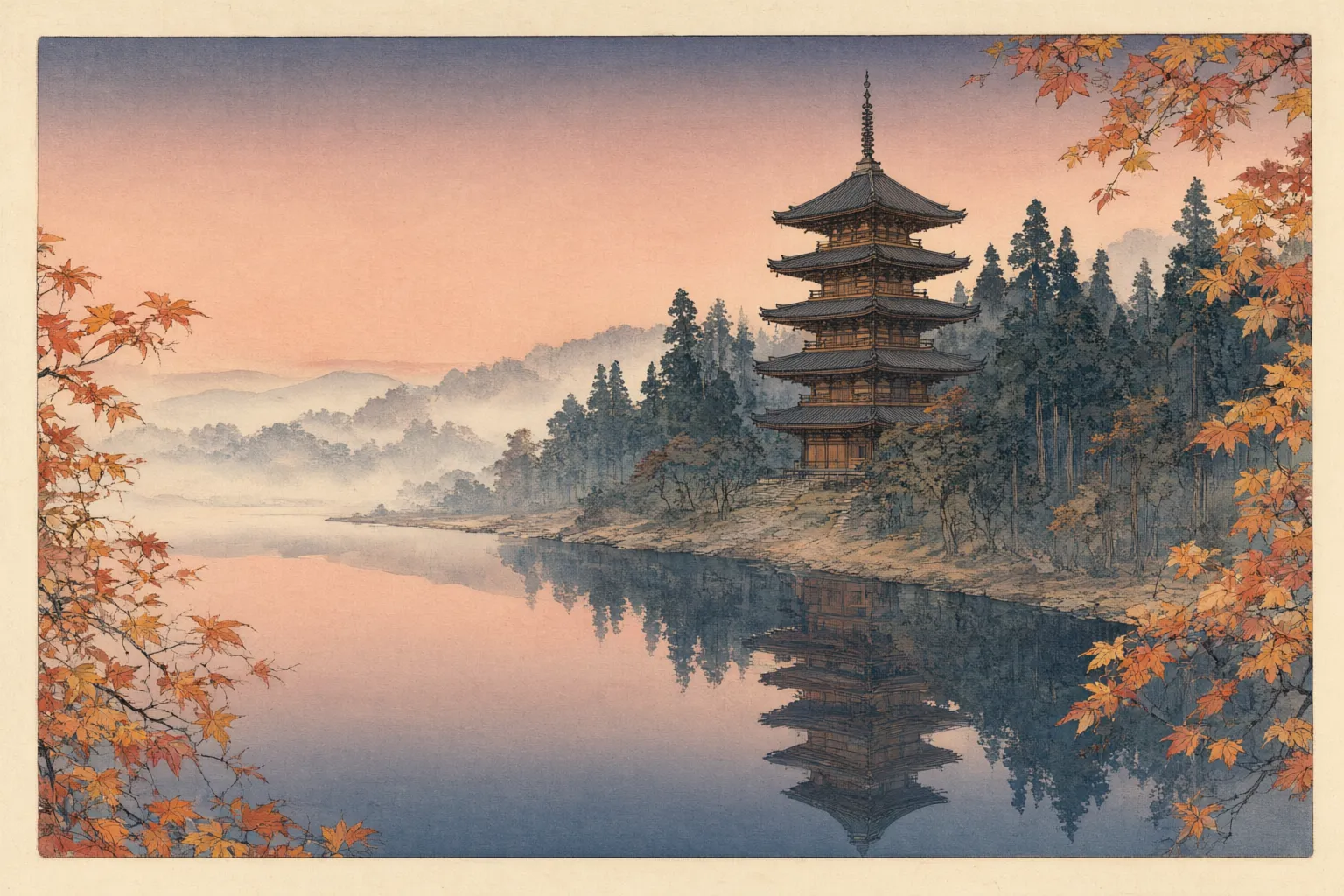
It also spent most of three years inside scaffolding. The hinoki-bark roof was stripped and re-laid for the first time in roughly seventy years, the scaffolding came down in March 2026, and the work was formally marked that April. Guides written before then will tell you the tower is under wraps. It is not: it is a six-hundred-year-old building with a brand-new roof, which is a rare thing to catch.
The Five-Storey Pagoda at Rurikoji 瑠璃光寺五重塔
Yamaguchi, yamaguchi
A pagoda of about 1442, raised by the Ouchi in mourning for Ouchi Yoshihiro: thirty-one metres, a National Treasure, never toppled and never rebuilt. Japan ranks it with Horyuji and Daigoji.
Getting there: In Kozan Park, a short bus ride or half an hour on foot from Yamaguchi Station. Free, and visible at any hour.
What to know first: It spent most of three years inside scaffolding and came out of it in 2026. The hinoki-bark roof was stripped and re-laid for the first time in about seventy years, the scaffolding came down in March 2026 and the completion was marked that April, so the thing you see now is a national treasure with a brand-new roof — which is both the best possible time to come and the reason older guides tell you it is under wraps.
Part 2 — The house, and what happened in it
The Ouchi ruled from a walled residence rather than a castle — the same arrangement as the Takeda in Kai, and for the same reason: a family that secure does not need a keep.
The Ouchi Clan Residence Site 大内氏館跡
Yamaguchi, yamaguchi
Earthen ramparts and moats about a hundred and sixty metres across, partly restored, with Ryufukuji standing on part of the ground.
Getting there: East of central Yamaguchi, walkable from the Kozan Park sites. Free.
What to know first: The founding date is disputed: tradition says 1360 under Ouchi Hiroyo, the excavation points to major building a century later. The Ouchi ruled from a residence rather than a castle, as the Takeda did in Kai.
In 1551 Yoshitaka’s senior retainer Sue Harukata turned on him. Yoshitaka fled west and killed himself at Tainei-ji in Nagato, and the house effectively ended there; within a few years the Mori had taken everything. Ryufukuji, which stands on part of the residence ground today, was restored as his memorial temple, and it holds the portrait at the top of this page — painted in 1557, six years after he died, in the place where he had lived.
Part 3 — The garden
The Sesshu Garden at Joeiji 常栄寺雪舟庭
Yamaguchi, yamaguchi
A dry landscape of stone groupings behind the temple, commissioned by Ouchi Masahiro, designated both a National Historic Site and a Place of Scenic Beauty.
Getting there: North of Yamaguchi, fifteen minutes by bus or taxi from the station.
What to know first: That Sesshu laid it out himself is tradition rather than record. He was in Yamaguchi under Ouchi patronage, which is what makes the attribution plausible — not what makes it documented.
Joeiji’s garden is the other thing people come for: a dry landscape of stone groupings, a National Historic Site and a Place of Scenic Beauty, and traditionally the work of Sesshu Toyo, the greatest ink painter in Japanese history, who was in Yamaguchi under Ouchi patronage and sailed to Ming China on an Ouchi ship.
Whether he laid it out himself is tradition rather than record. The patronage is documented; the trowel is not.
Check rooms in Yuda for your dates
Part 4 — Fact and legend
Documented: the trade, and what it bought. The Ouchi licence to trade with Ming China is the material fact under all of this. The pagoda, the garden, the painters and the Jesuit all sit on top of a shipping business.
Documented, and usually told as a curiosity: Xavier. Francis Xavier preached in Yamaguchi in 1551 with Ouchi permission, having first tried and failed in Kyoto. It is treated as a footnote about Christianity in Japan. It is better read as evidence of what kind of place this was: a provincial lord with his own foreign policy.
Tradition: the garden. See above.
Retold: “the Kyoto of the West” as the Ouchi’s own slogan. The phrase is how Yamaguchi sells itself now, and the city was genuinely laid out on a Kyoto grid in imitation. The branding is modern; the imitation is real and is still legible in the street plan.
Before you go
The pagoda stands in Kozan Park, free and visible at any hour, which makes it the rare major site you can see at dawn or after dinner. Joeiji is fifteen minutes out of the centre by bus or taxi and keeps ordinary temple hours. The residence site is free, a short walk east of the centre, and is earthworks rather than architecture — go for the ground plan, not for a building.
Yuda is where to sleep: nine properties bookable in English, almost all about ten minutes on foot from Yudaonsen station, and fifteen minutes by bus from the sites. The spring has no verified connection to the Ouchi at all — it is a base and this guide will not pretend otherwise.
One property there is worth a note. Nishi-no-Miyabi Tokiwa carries four hundred and eighty-six reviews, which is more than any other inn anywhere on this site, and its 4.1 is consequently the most trustworthy number here.
Where to Stay: Yuda Onsen
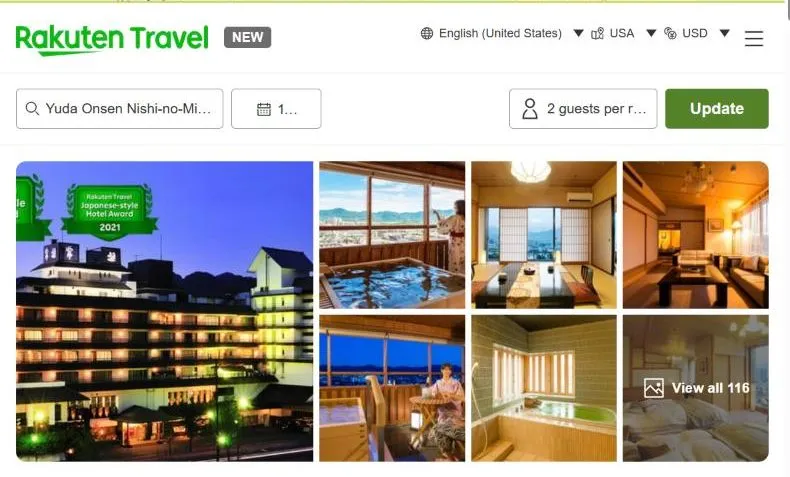 Nishi-no-Miyabi Tokiwafrom $109
The value pick, and the best-evidenced score on this entire site: 4.1 across four hundred and eighty-six reviews, where most inns here rest on twenty. A large old hot-spring hotel rather than an intimate ryokan, eleven minutes from the station.
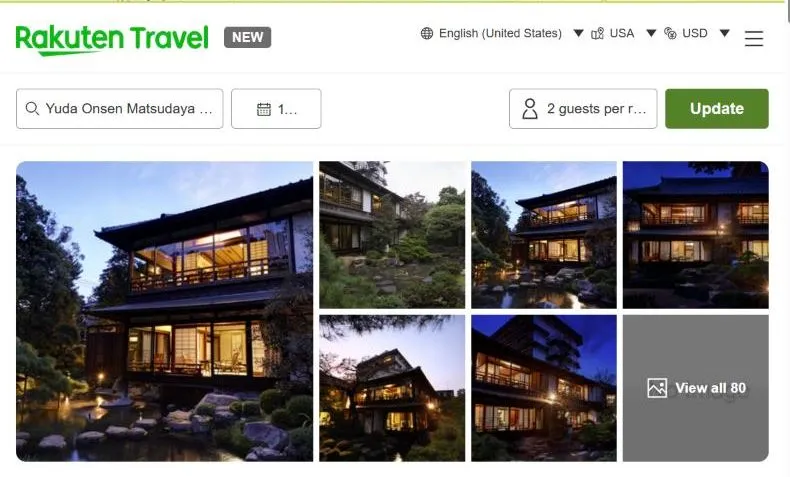 Matsudaya Hotelfrom $254
The historic house of the spring and the highest score in it, 4.7 from twenty-three reviews. If one night of a Yamaguchi trip is the expensive one, this is where to spend it.
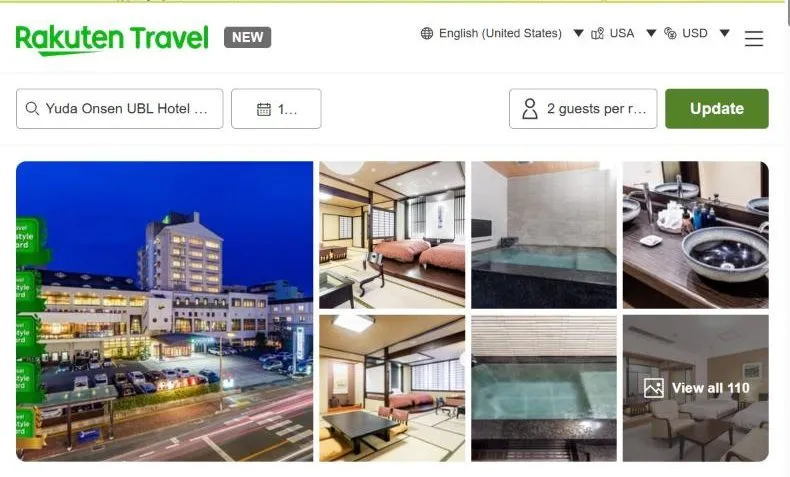 UBL Hotel Matsumasafrom $267
The middle way: a hundred reviews at 4.4, which is a far firmer number than the pricier inns can show, and ten minutes from the station.
Inn images are screenshots of each inn's own page on Rakuten Travel, captured 2026-10-27. The photographs in them belong to the inns; pages and prices change.
The other 6 inns in Yuda Onsen
Prices are the lowest seen for two people, one night, on 2026-12-11, checked 2026-10-26. They move with the date — treat them as a rough floor, not a quote. Japanese inns are listed under romanised names that often differ from the signs outside them, so these link straight to the inn rather than to a search. What the booking page looks like.
See what is available in Yuda Onsen
9 inns were bookable in English on the date checked. Availability shifts: a check four months earlier returned a partly different list, so this is what was open then rather than a fixed roster. Availability moves quickly at smaller inns, and weekends book out first.