The Shimazu: Four Hundred Years in the Same Province
Kagoshima, a garden with a volcano in it, and the factory a lord built in 1851
Most of the houses on this site were moved. The Mori were cut down and shifted to the coast, the Uesugi marched from Echigo to Aizu to Yonezawa, the Date ended up two provinces from where they started.
The Shimazu stayed where they were from the 1190s until the domains were abolished in 1871. Nearly seven hundred years, in the same province, under the same volcano.
Part 1 — A castle that is a wall
Kagoshima’s castle tells you the whole political situation at a glance. The Shimazu built no keep and no tower: Tsurumaru is a low walled residence at the foot of a hill, because a house that had held its province for four centuries did not need to announce anything.
Tsurumaru Castle Site 鶴丸城跡(御楼門)
Kagoshima, kagoshima
The moat and the stone walls, and the Goromon gate, rebuilt in 2020 at the scale of the original. The prefectural museum stands inside the grounds.
Getting there: Central Kagoshima, walkable from the city tram.
What to know first: The buildings burned in 1873 and the gate is only a few years old. The castle was always a low walled residence rather than a tower, which is the point: the Shimazu held Satsuma without needing one.
The stone still carries bullet marks from 1877, when the Satsuma Rebellion ended on the hill directly behind it. The great gate was rebuilt in 2020, which makes the oldest thing on the site the walls and the newest thing the most photographed.
Part 2 — The garden, and the factory behind it
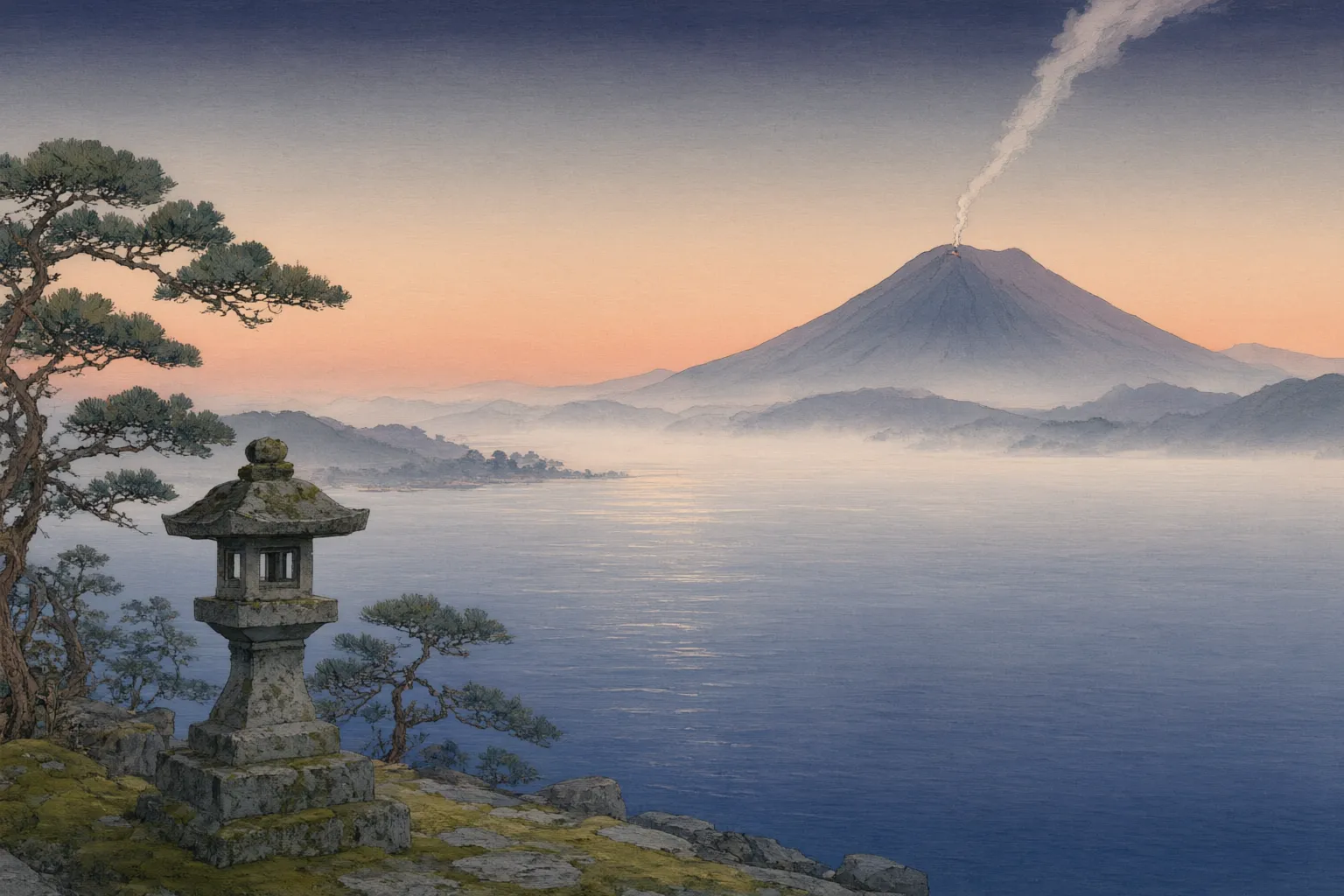

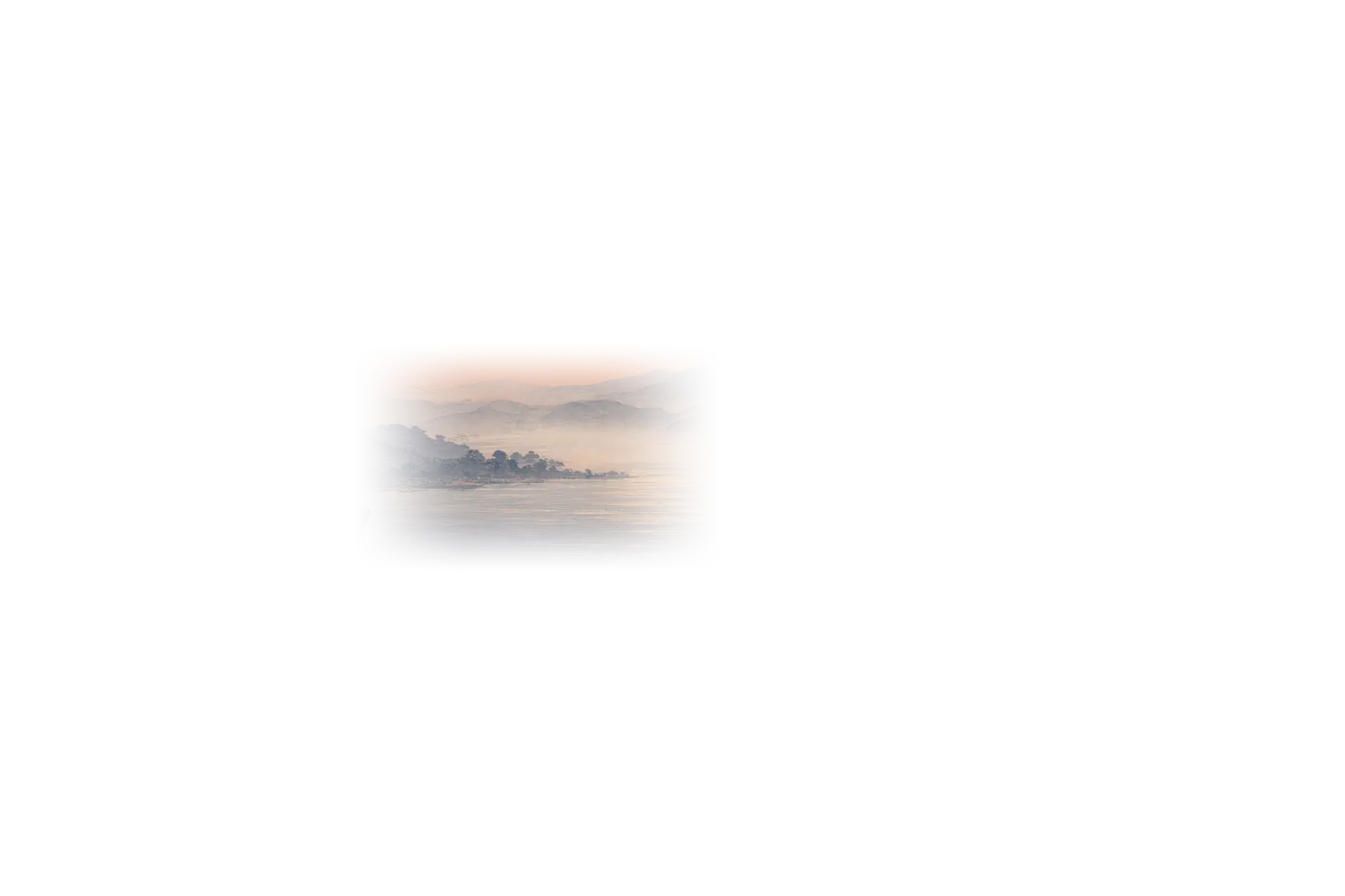
Sengan-en is a villa garden of 1658 whose designers did something no European garden would attempt: they borrowed an active volcano. Sakurajima sits across the bay as the centrepiece, and the bay itself reads as the pond.
Sengan-en 仙巌園
Kagoshima, kagoshima
The Shimazu villa and garden of 1658, laid out to borrow Sakurajima and the bay as its view, with the Shoko Shuseikan beside it: the industrial works Shimazu Nariakira started in 1851, now a museum of the clan.
Getting there: Bus from Kagoshima-Chuo Station, about forty minutes, less from the centre. Open 9:00 to 17:00 and closed on no day of the year. Paid entry, with a combined ticket covering the garden and the Shuseikan museum; the garden does not publish the figure on its front page, so buy at the gate or online.
What to know first: The UNESCO listing here is for Meiji industry, not for the garden. Guides run the two together, and they are separate reasons to come.
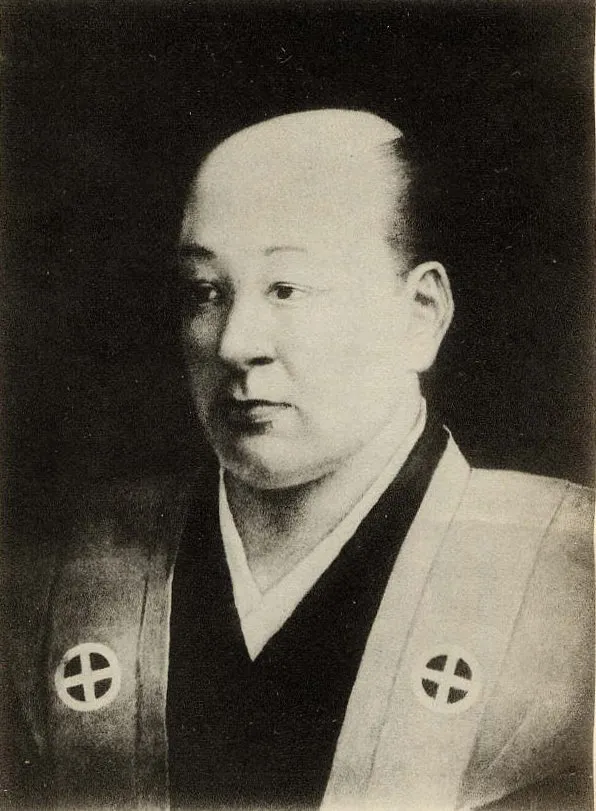
Beside it is the part that matters more. In 1851 Shimazu Nariakira — the man photographed above — built the Shuseikan, an industrial complex with a reverberatory furnace, a glassworks, a shipyard and experiments in photography, on his own initiative and his own domain’s money, a decade before the shogunate began doing anything comparable.
He is photographed because he was the one who paid for the cameras. The daguerreotype his retainers made of him in 1857 is one of the earliest photographs taken by Japanese in Japan, and the apparatus that produced it was built on the ground beside his garden.
Part 3 — The graves without a temple
The Shimazu Graves at Fukushoji 福昌寺跡 島津家墓地
Kagoshima, kagoshima
The clan cemetery, holding the heads of the Shimazu house across some five centuries, the oldest graves going back to the fourteenth century.
Getting there: North of central Kagoshima, a short bus ride. The cemetery is maintained and open.
What to know first: The temple itself is gone, abolished in the anti-Buddhist campaign of 1869, with a school now on its site. Only the graveyard survived, which is why it is easy to walk straight past.
Fukushoji was the Shimazu family temple for five centuries. In 1869 the new government’s anti-Buddhist campaign abolished it, and the buildings came down. The graves stayed. A school now stands on the temple site, and the heads of the house lie in a quiet cemetery behind it — which is a stranger experience than a temple would have been, and easy to walk past entirely.
Check rooms in Kagoshima for your dates
Part 4 — Fact and legend
Documented, and underrated: the industry came first. The Shuseikan was running in 1851. Perry arrived in 1853. The story that Japan industrialised because it was forced to is true at the national scale and false here, and Satsuma’s head start is a large part of why Satsuma mattered so much in the 1860s.
Documented: the retreat through the middle. At Sekigahara in 1600 the Shimazu contingent, trapped on the losing side, withdrew by charging straight through the enemy centre and out the other side. Of roughly a thousand men, some tens came home. This one is real, and the Shimazu had the astonishing good fortune to keep their province afterwards.
Retold: the UNESCO listing covers the garden. It does not. The 2015 World Heritage inscription covers Meiji industrial sites, and at Sengan-en that means the Shuseikan buildings and the works, not the villa or the garden. Guides run them together constantly.
Retold: that the castle is “ruins” because of the war. Tsurumaru burned in 1873, before any war touched it.
Before you go
Sengan-en is open 9:00 to 17:00 every day of the year and sits about forty minutes by bus from Kagoshima-Chuo. The combined ticket covers the garden and the Shuseikan museum; the price is not on the garden’s front page, so buy at the gate or online.
Tsurumaru is in the middle of town and free, with the prefectural museum inside the walls. The Fukushoji graves are a short bus ride north and are open ground.
Stay in the city. All three sites are here, and Kagoshima has sixty-five properties bookable in English — the second deepest list anywhere on this site. They are city hotels rather than ryokan: Kagoshima is a hot-spring town in the sense that the water is under the pavement, not in the sense that there is a village of inns to sleep in.
If you do want that, Myoken is about fifty minutes north toward Kirishima, with four inns bookable in English and no walkable access to any of them. It is a different day out, not an evening after this one.
Where to Stay: Kagoshima
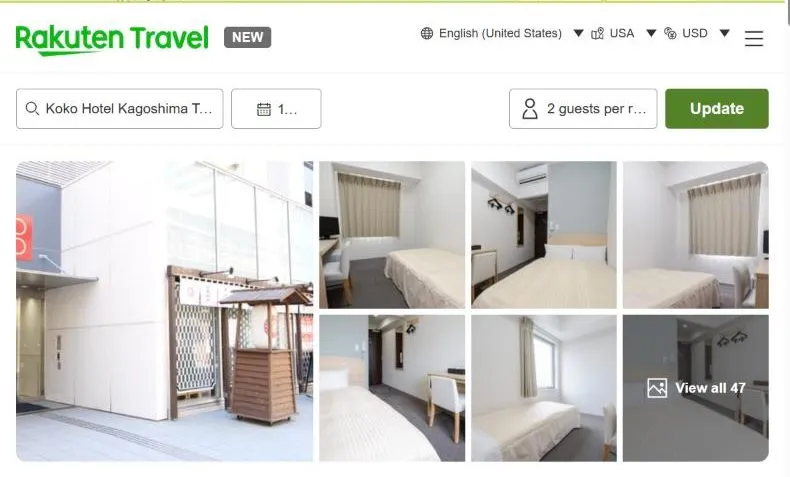 Koko Hotel Kagoshima Tenmonkanfrom $43
The value pick and the cheapest decent bed on this entire site: 4.1 across eighty-six reviews, in Tenmonkan, which is the part of town you want to walk out into in the evening.
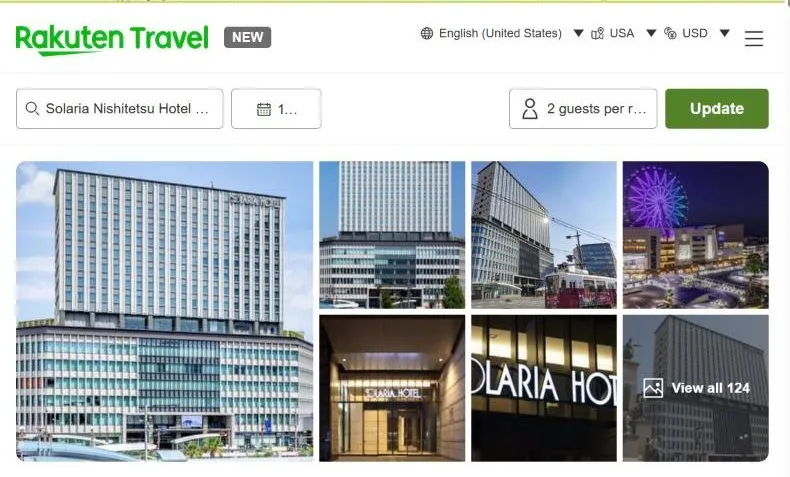 Solaria Nishitetsu Hotel Kagoshimafrom $131
The middle of the range and the firmest numbers in it: 4.4 across eighty-four reviews, a short walk from the tram and from Tenmonkan.
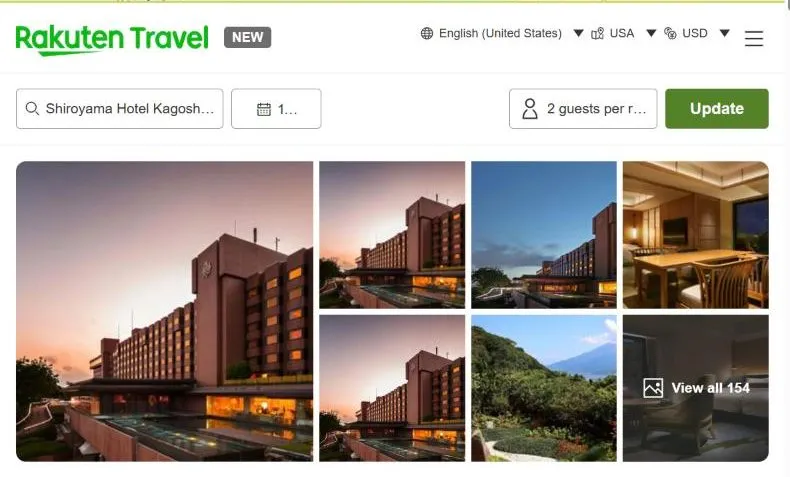 Shiroyama Hotel Kagoshimafrom $444
The splurge, and the one with the view the whole city is about: it stands on the hill where the Satsuma Rebellion ended, looking straight across the bay at Sakurajima, and its open-air bath looks at the volcano. 4.6 from a hundred and three reviews.
Inn images are screenshots of each inn's own page on Rakuten Travel, captured 2026-10-27. The photographs in them belong to the inns; pages and prices change.
The other 3 inns in Kagoshima
Prices are the lowest seen for two people, one night, on 2026-12-11, checked 2026-10-26. They move with the date — treat them as a rough floor, not a quote. Japanese inns are listed under romanised names that often differ from the signs outside them, so these link straight to the inn rather than to a search. What the booking page looks like.
See what is available in Kagoshima
6 inns were bookable in English on the date checked. Availability shifts: a check four months earlier returned a partly different list, so this is what was open then rather than a fixed roster. Availability moves quickly at smaller inns, and weekends book out first.