The Chosokabe: Shikoku in Ten Years, Lost in One
Oko, Urado, and a statue at Katsurahama that is somebody else
Chosokabe Motochika spent about twenty years taking the island of Shikoku. He completed it in 1585 and lost three of its four provinces the same year, when Toyotomi Hideyoshi landed with something over a hundred thousand men and he surrendered after about six weeks.
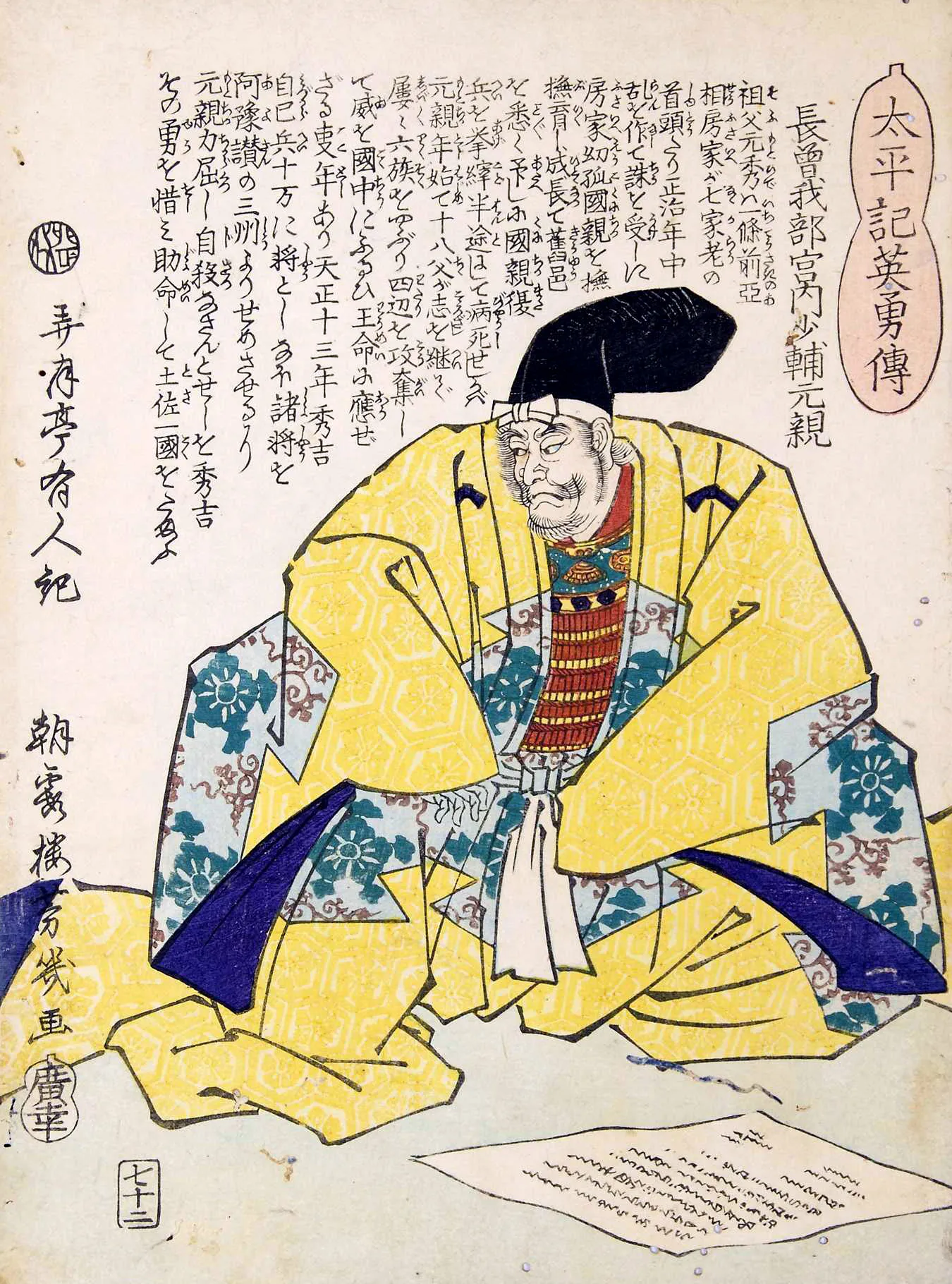
That is not his face either. It is Utagawa Yoshiiku in 1867, drawing a man who had been dead for two hundred and sixty-eight years, for a series of heroic warrior prints. This site has now used three such images — Shingen, Motochika and the Kuniyoshi print — because for a great many sixteenth-century lords a nineteenth-century imagining is the only picture there is, and saying so is more useful than pretending otherwise.
Part 1 — A castle made of earth
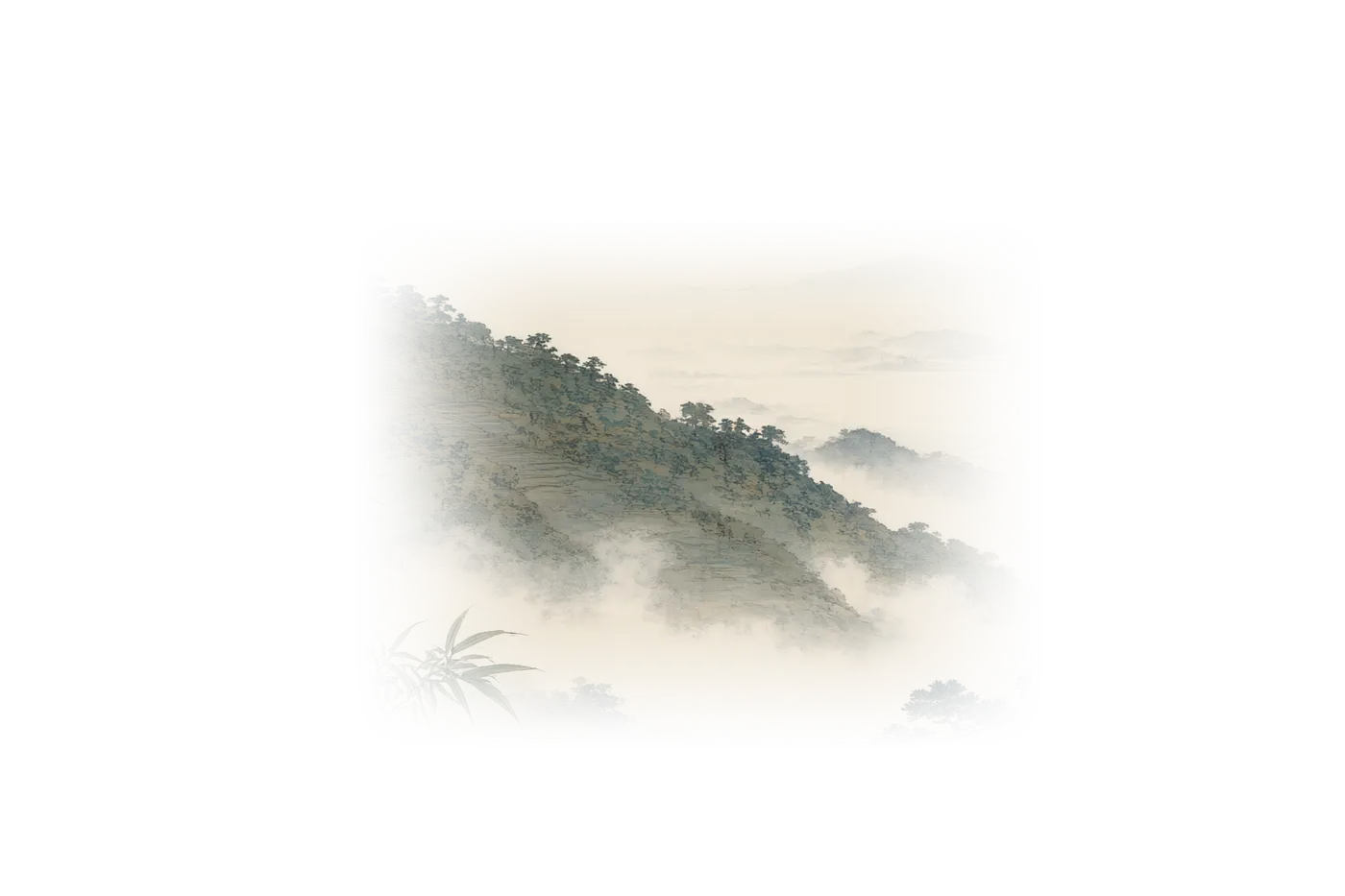
Oko is where the family came from and where Motochika ruled. It is a hill with its sides cut into terraces, dry moats sliced across the ridge, and one stretch of stone wall.
Oko Castle Site 岡豊城跡
Nankoku, kochi
The earthworks of the Chosokabe stronghold — baileys, dry moats cut into the ridge, a stone wall of the Sannodan — with the Kochi Prefectural Museum of History on the site holding the clan's documents.
Getting there: Bus from Kochi Station towards Nankoku, about thirty minutes, then a walk up the hill.
What to know first: An earthwork castle, not a stone one. There is nothing to photograph from the valley, and the museum is what makes the visit legible.
There is nothing to photograph from the road, which is why almost nobody comes, and why the prefectural museum built on the site is what makes the visit work: the Chosokabe documents are there, and from the ridge you can see the shape of the earthworks once you know what you are looking at.
Earthwork castles were the normal kind. The stone keeps everybody pictures came later, and mostly belonged to the people who won.
Part 2 — The move that did not help
In 1591 Motochika moved his seat from Oko down to Urado, on the coast above what is now Katsurahama, because Oko flooded. He died there in 1599. His son Morichika backed the losing side at Sekigahara the next year, and the Chosokabe ceased to exist as a daimyo house: Tosa went to the Yamauchi, who built Kochi Castle and ran the province until 1871.
Urado Castle Site 浦戸城跡
Kochi, kochi
Very little: the hill above Katsurahama where Motochika moved his seat in 1591, a fragment of wall and a marker. The Sakamoto Ryoma Memorial Museum now occupies the site.
Getting there: Bus from Kochi Station to Katsurahama, about forty minutes.
What to know first: The famous bronze statue above the beach is Sakamoto Ryoma, not Chosokabe Motochika — three centuries apart, and routinely conflated. Motochika's own statue is at Oko.
Part 3 — Fact and legend
The statue at Katsurahama is Sakamoto Ryoma. This is the single most common mistake made about this site. The famous bronze figure above the beach, in boots, looking out at the Pacific, is the nineteenth-century revolutionary who was born in Kochi — not Motochika, who died two and a half centuries earlier. They get conflated constantly, including in print. Motochika’s own statue is at Oko, where it ought to be.
“The Chosokabe took Shikoku” needs a date attached. He did, and he held the completed set for a matter of months. The claim is true and the duration is the story.
The one-day sword hunt and the Chosokabe Motochika Hyakkajo. The hundred articles of law issued in his son’s name in 1597 survive and are a genuinely important document of sixteenth-century provincial government. They are also much less famous than the legends, which is the usual ratio.
What is not settled: where he is buried. Kochi’s list of historic sites includes a Chosokabe Motochika grave, and its position does not match the temple the guidebooks associate with him. If you want the grave, check the prefectural museum’s directions rather than a travel blog’s.
Part 4 — Where to stay
Check rooms in Kochi for your dates
There is no onsen village on this route and this guide is not going to invent one. Kochi city is where you sleep: forty-four properties bookable in English, business hotels rather than ryokan, and unusually trustworthy numbers behind them — one carries two hundred and thirty-nine reviews, which is rare in this part of the country.
One of them, Sansuien, stands in the grounds of a former Yamauchi residence and has a hot spring, which means you can end a day about the family that lost Tosa by sleeping in the garden of the family that took it.
Before you go
Oko is about thirty minutes by bus from Kochi station toward Nankoku, then a walk uphill. Go for the museum as much as the earthworks, and go in dry weather: it is a hill of grass and trees with no shelter.
Urado is forty minutes the other way, at Katsurahama, and there is very little to see — a marker, some wall. Most people go for the beach and the Ryoma museum, which is fine, as long as you know which of them you are looking at.
Kochi Castle, which has one of the twelve original keeps left in Japan, is in the middle of town and is not Chosokabe at all. It belongs to the Yamauchi. It is also excellent, and you should go.
Where to Stay: Kochi
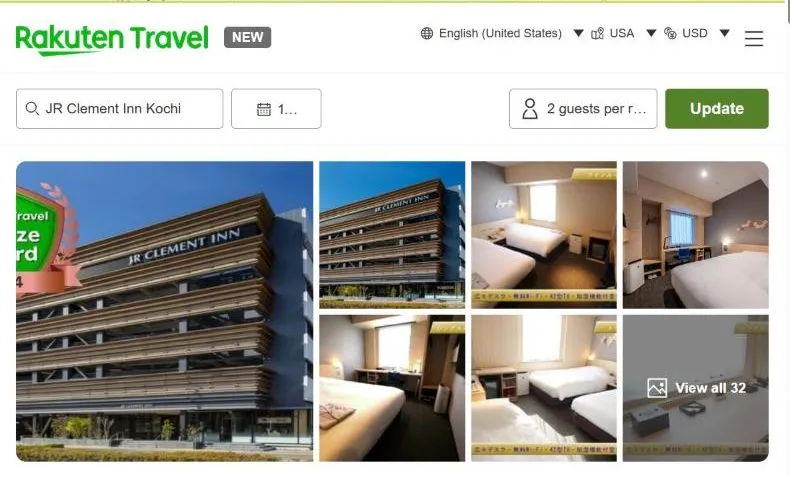 JR Clement Inn Kochifrom $91
The value pick, and the best-evidenced number on the island as far as this file goes: 4.4 across two hundred and thirty-nine reviews, at the station, which is where the bus to Oko leaves from.
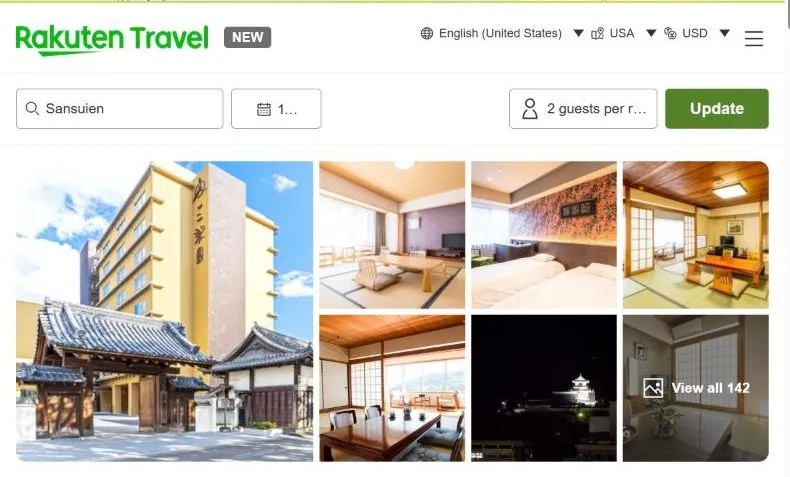 Sansuienfrom $97
The one with a hot spring and a garden, in the grounds of what was a Yamauchi residence — the house that replaced the Chosokabe. 4.3 across a hundred and thirty reviews.
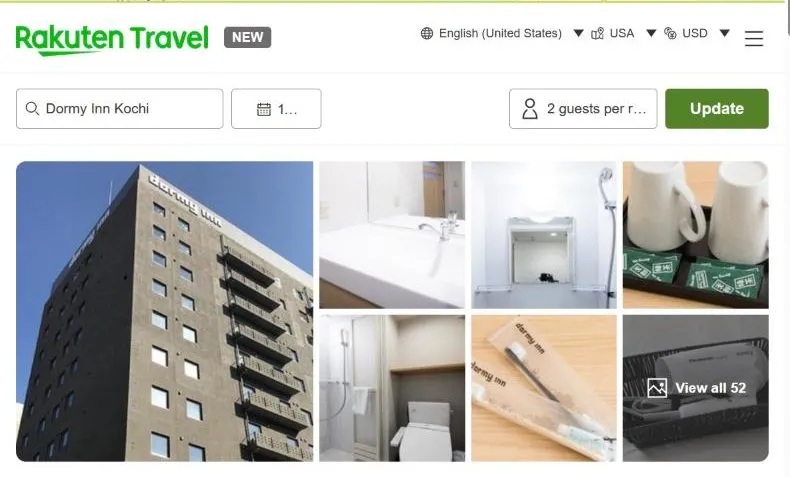 Dormy Inn Kochifrom $126
The reliable middle: a large public bath, 4.4 from a hundred and seventy-six reviews, and five minutes from the Harimayabashi trams.
Inn images are screenshots of each inn's own page on Rakuten Travel, captured 2026-10-27. The photographs in them belong to the inns; pages and prices change.
The other 4 inns in Kochi
Prices are the lowest seen for two people, one night, on 2026-12-11, checked 2026-10-26. They move with the date — treat them as a rough floor, not a quote. Japanese inns are listed under romanised names that often differ from the signs outside them, so these link straight to the inn rather than to a search. What the booking page looks like.
See what is available in Kochi
7 inns were bookable in English on the date checked. Availability shifts: a check four months earlier returned a partly different list, so this is what was open then rather than a fixed roster. Availability moves quickly at smaller inns, and weekends book out first.