Oda Nobunaga: The Unifier Who Was Never Shogun
Azuchi, Gifu, and a temple in Kyoto that is not where he died
Oda Nobunaga held more of Japan than anyone had in two centuries and never took the title of shogun. Hideyoshi, who finished the job, did not take it either. Only Ieyasu did, in 1603, and by then both of them were dead.
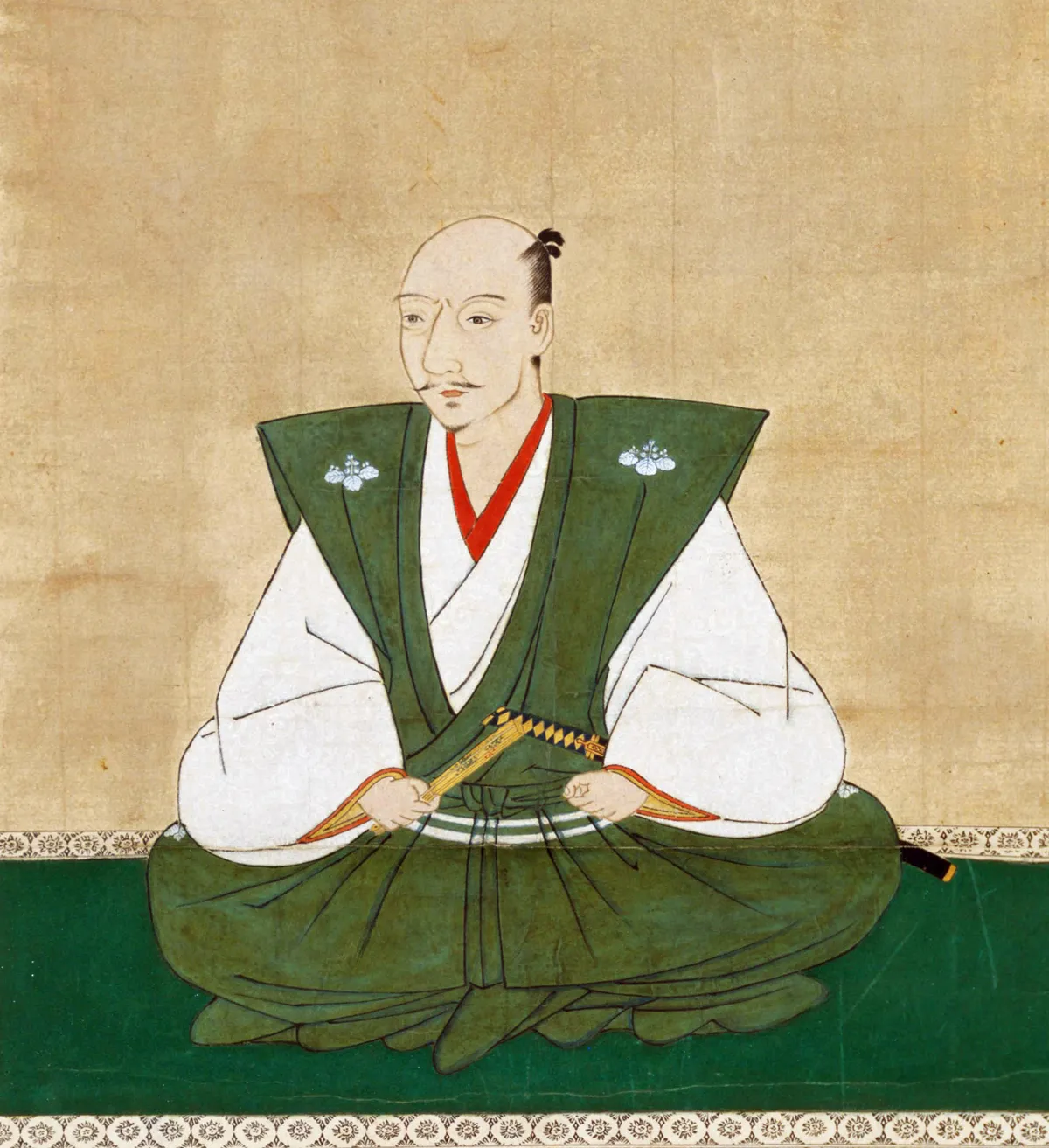
That portrait is worth a moment, because it is the best-evidenced image on this entire site. It was painted in 1583, the year after he was killed, by Kano Soshu — a working painter of his own generation. Compare it with the Takeda and Chosokabe pages, where the only pictures are woodblock prints made two and a half centuries after the fact.
Part 1 — Azuchi, and what a castle became
Before Azuchi, a Japanese castle was a defensive position. Nobunaga built something else on a hill above Lake Biwa between 1576 and 1579: a seven-storey tower, gilded and painted inside by Kano Eitoku, with a temple of his own foundation inside the walls and a town laid out below under free-market rules.
It was a statement that a castle could be an instrument of government and a piece of propaganda rather than a fort. Every stone keep that followed is downstream of it.
He was killed in Kyoto in June 1582. Azuchi burned within a fortnight, nobody agrees who set the fire, and his body was never found.
Azuchi Castle Site 安土城跡
Omihachiman, shiga
The mountain itself, cut into stone-walled terraces, the great stairway running straight up it, and the foundations of the keep on top. Soken-ji, the temple Nobunaga put inside his own castle, keeps its gate and a three-storey pagoda.
Getting there: Twenty-five minutes on foot from Azuchi Station on the Biwako line, then a climb. A Special Historic Site with paid entry to the mountain, around 700 yen, open roughly 9:00 to 16:00 — published figures are a couple of years old, so treat them as indicative.
What to know first: Everything above the stonework burned within days of Nobunaga's death in 1582 and his body was never found. The full-height keep people photograph is a museum reconstruction nearby, not the castle.
What is left is the mountain itself, cut into stone-walled terraces, with a stairway running straight up it that is still an extraordinary thing to climb. The keep exists as foundations you can stand in. Soken-ji, the temple he put inside his own castle, keeps its gate and a three-storey pagoda.
2026 is the four hundred and fiftieth anniversary of the castle’s founding, and with an NHK drama running on the Toyotomi this year the site is busier than it has been in decades. Go early.
Part 2 — Gifu, which is shut
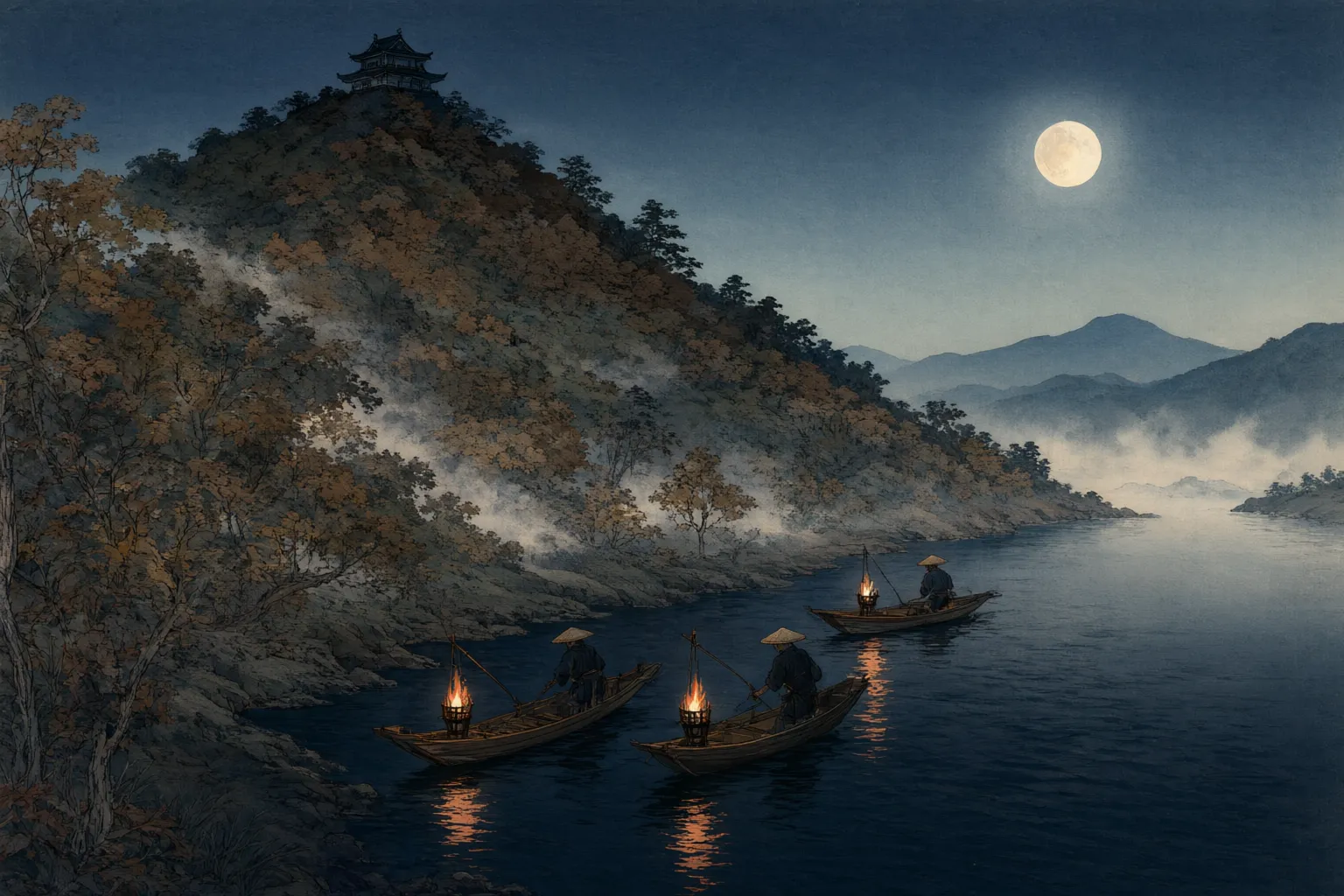
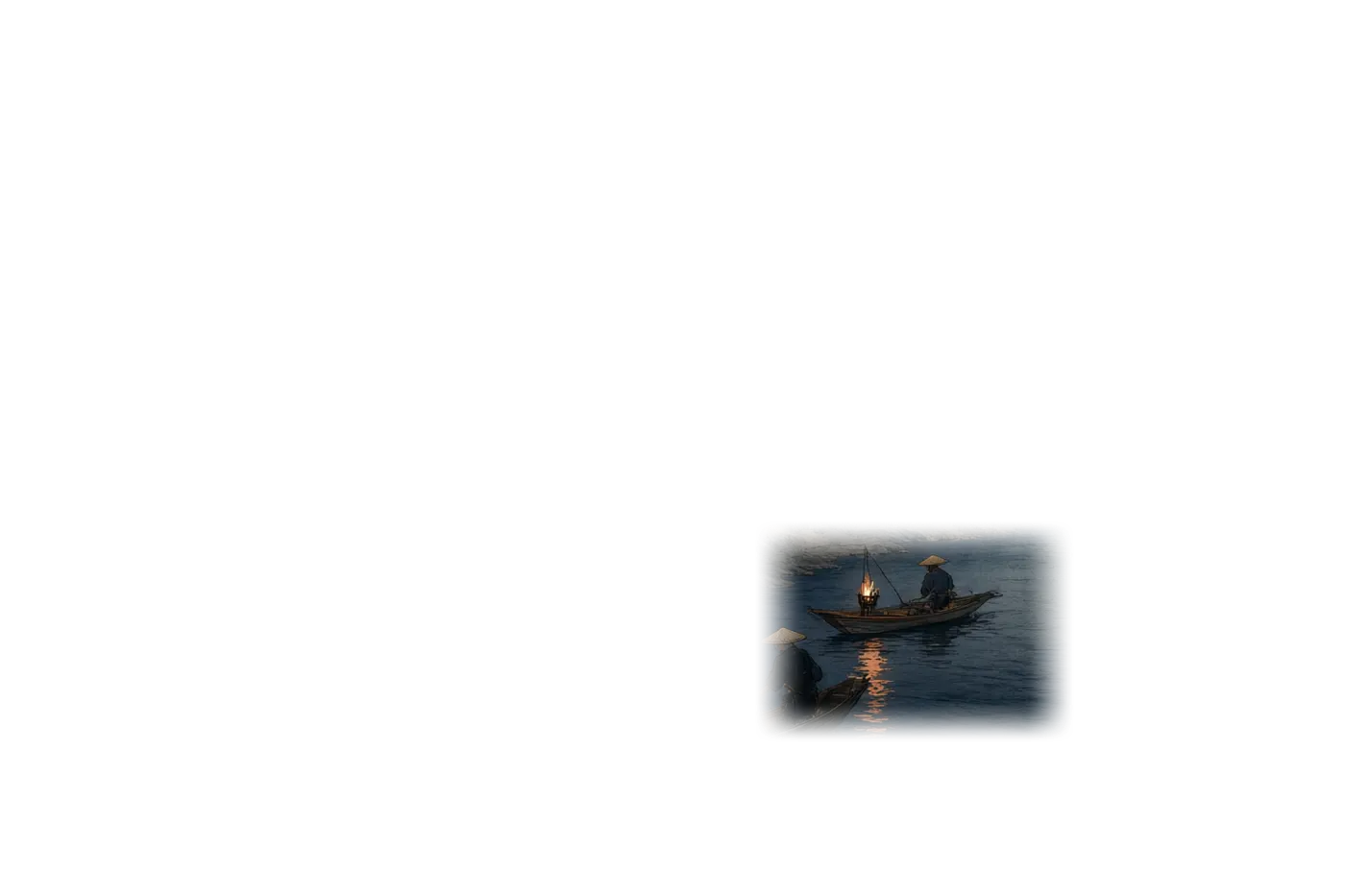
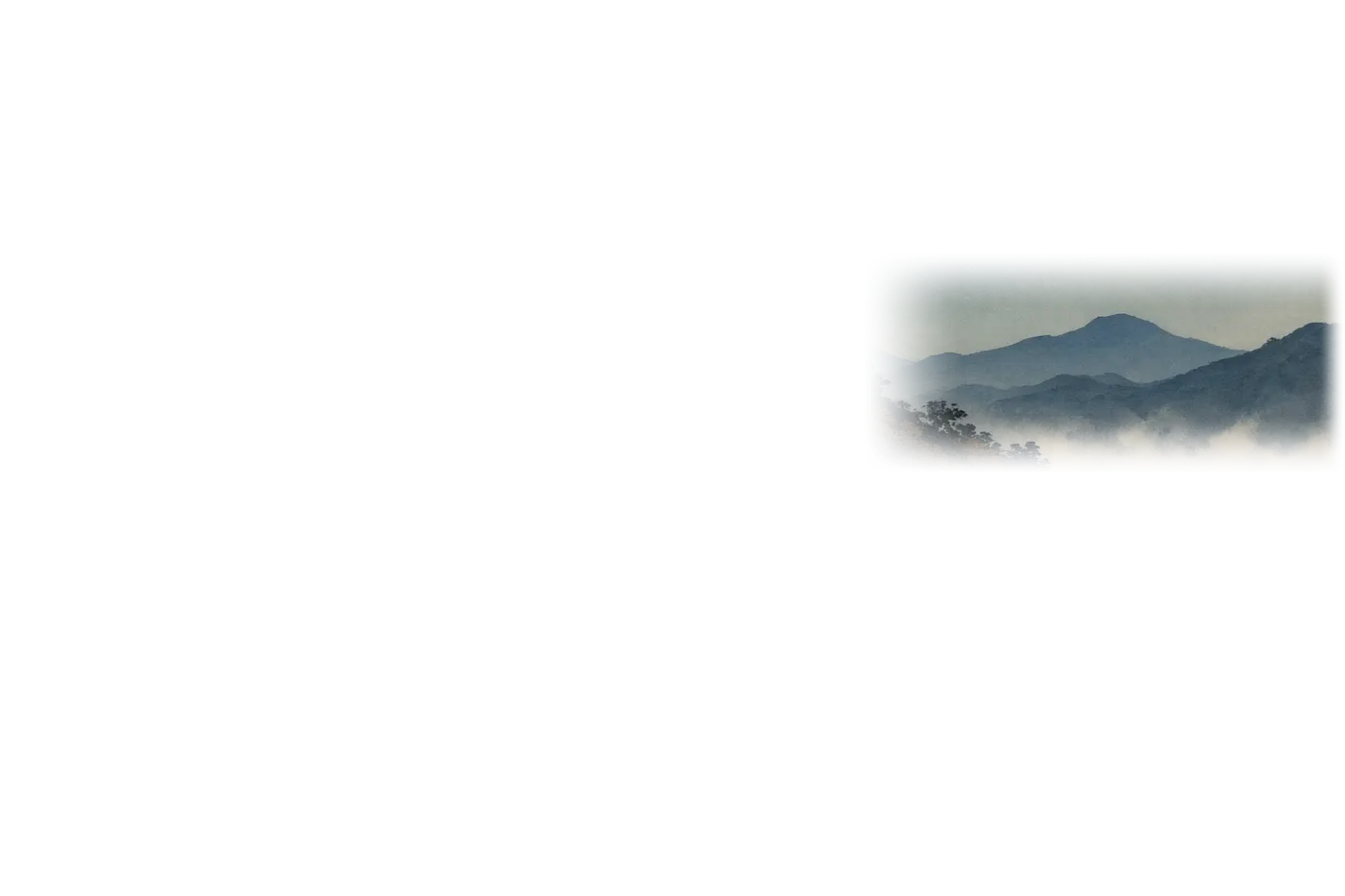
Nobunaga took the castle on Mount Kinka in 1567, renamed the town Gifu, and began using the seal that read tenka fubu — the realm under one sword. It is where the project started.
Gifu Castle 岐阜城
Gifu, gifu
Nobunaga's stonework on Mount Kinka, and at the foot of it the excavated site of his palace and gardens, where a wall uncovered in 2020 may be his.
Getting there: Ropeway up Mount Kinka from Gifu Park, about four minutes, then a short climb; bus from JR Gifu Station to the park. The ropeway runs from 9:00, later in summer, and closes for inspection for stretches of the winter.
What to know first: The castle itself is shut. It closed on 19 May 2026 for seismic strengthening and is not due to reopen until late October 2027, so the keep cannot be entered at all at present — the ropeway, the mountain and the view are still there. When it does reopen it will still be a concrete reconstruction of 1956: Nobunaga took this castle in 1567 and renamed the town Gifu, it was destroyed after 1600 and its materials carted off to build Kano. The view is his. The building is not.
Read that caution before you plan anything. The castle closed on 19 May 2026 for seismic strengthening and is not expected to reopen until late October 2027. The ropeway still runs and the mountain and the view are unaffected, but the building at the top cannot be entered, and most of what is written about Gifu online does not know this yet.
It is a 1956 concrete reconstruction in any case. The honest reasons to go up are the view Nobunaga chose and, at the bottom, the excavated site of his palace and gardens at the foot of the mountain — which is real, and where a wall uncovered in 2020 may be his own work.
Part 3 — Honno-ji, which is not the place
Honno-ji Temple 本能寺
Kyoto, kyoto
A temple in central Kyoto with a memorial to Nobunaga and a treasure house, standing on the ground Hideyoshi moved it to.
Getting there: Central Kyoto, on Teramachi by the Oike subway stations.
What to know first: This is not where he died. Hideyoshi moved the temple here in the 1590s and it burned twice more afterwards; the 1582 site is some way south-west and marked only by a stone. Visitors are routinely sent to the wrong one.
Akechi Mitsuhide surrounded him at Honno-ji before dawn on 21 June 1582 and he died in the fire. The temple of that name in central Kyoto today is not on that ground: Hideyoshi moved it in the 1590s, and it burned twice more afterwards. The 1582 site is some way south-west and marked by a stone in a residential street. Visitors are sent to the wrong one constantly, including by signage.
Part 4 — Fact and legend
Documented: never shogun. He held the court office of Udaijin and let the last Ashikaga shogun keep the title until he expelled him in 1573, after which the office simply sat empty. Taking it was not useful to him.
Retold, and probably true in substance: the free markets. The rakuichi rakuza policies — abolishing guild monopolies and toll barriers in his castle towns — are documented in his own edicts. The modern framing of Nobunaga as a free-market moderniser is an overlay on a real policy that had a military purpose: making his towns rich enough to supply armies.
Retold: the demon king. “Demon King of the Sixth Heaven” was a name he used of himself in a letter to Takeda Shingen, as a joke at the expense of Shingen’s Buddhist titles. It has been read straight ever since.
Not settled: who burned Azuchi. Akechi’s retreating men, Oda Nobukatsu, looters — the sources disagree and the castle was gone within two weeks of its owner.
Part 5 — Where to stay
Check rooms on the Nagara for your dates
Three inns on the Nagara, under the mountain, and that is the whole list — this is the thinnest stay area on the site. What they have instead of choice is position: the castle hill is directly above them, and in summer the cormorant fishing that Nobunaga’s successors protected works the river in front.
Azuchi is an hour and a half away by train and belongs to a different day, out of Kyoto or Omihachiman rather than out of Gifu.
Where to Stay: Nagaragawa Onsen
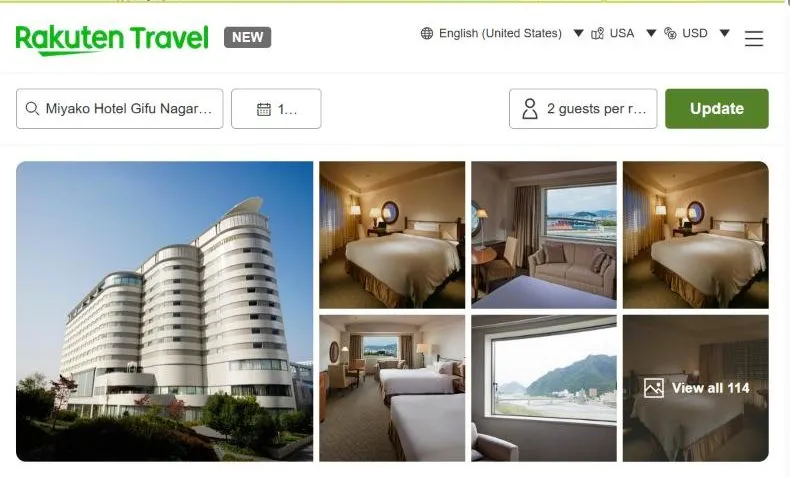 Miyako Hotel Gifu Nagaragawafrom $112
The value pick of the three, and a hotel rather than a ryokan — which on a river where the other two are expensive makes it the practical choice for a night before the mountain.
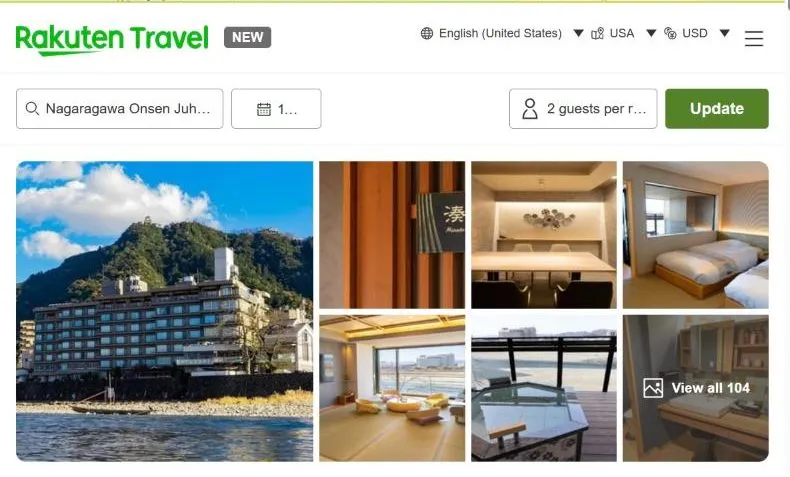 Juhachirofrom $189
The old house of the spring, on the river under the castle hill, and the one whose baths look straight up at Mount Kinka. If you are here for the cormorant fishing in summer it is a few minutes from the boats.
Inn images are screenshots of each inn's own page on Rakuten Travel, captured 2026-10-27. The photographs in them belong to the inns; pages and prices change.
The other 1 inns in Nagaragawa Onsen
Prices are the lowest seen for two people, one night, on 2026-12-11, checked 2026-10-26. They move with the date — treat them as a rough floor, not a quote. Japanese inns are listed under romanised names that often differ from the signs outside them, so these link straight to the inn rather than to a search. What the booking page looks like.
See what is available in Nagaragawa Onsen
3 inns were bookable in English on the date checked. Availability shifts: a check four months earlier returned a partly different list, so this is what was open then rather than a fixed roster. Availability moves quickly at smaller inns, and weekends book out first.