Tokugawa Yoshinobu: The Shogun Who Gave It Back
Nijo Castle, Shizuoka, and the forty-five years afterwards
Tokugawa Yoshinobu became the fifteenth shogun in January 1867 and gave the office back in October. He then lived another forty-five years.
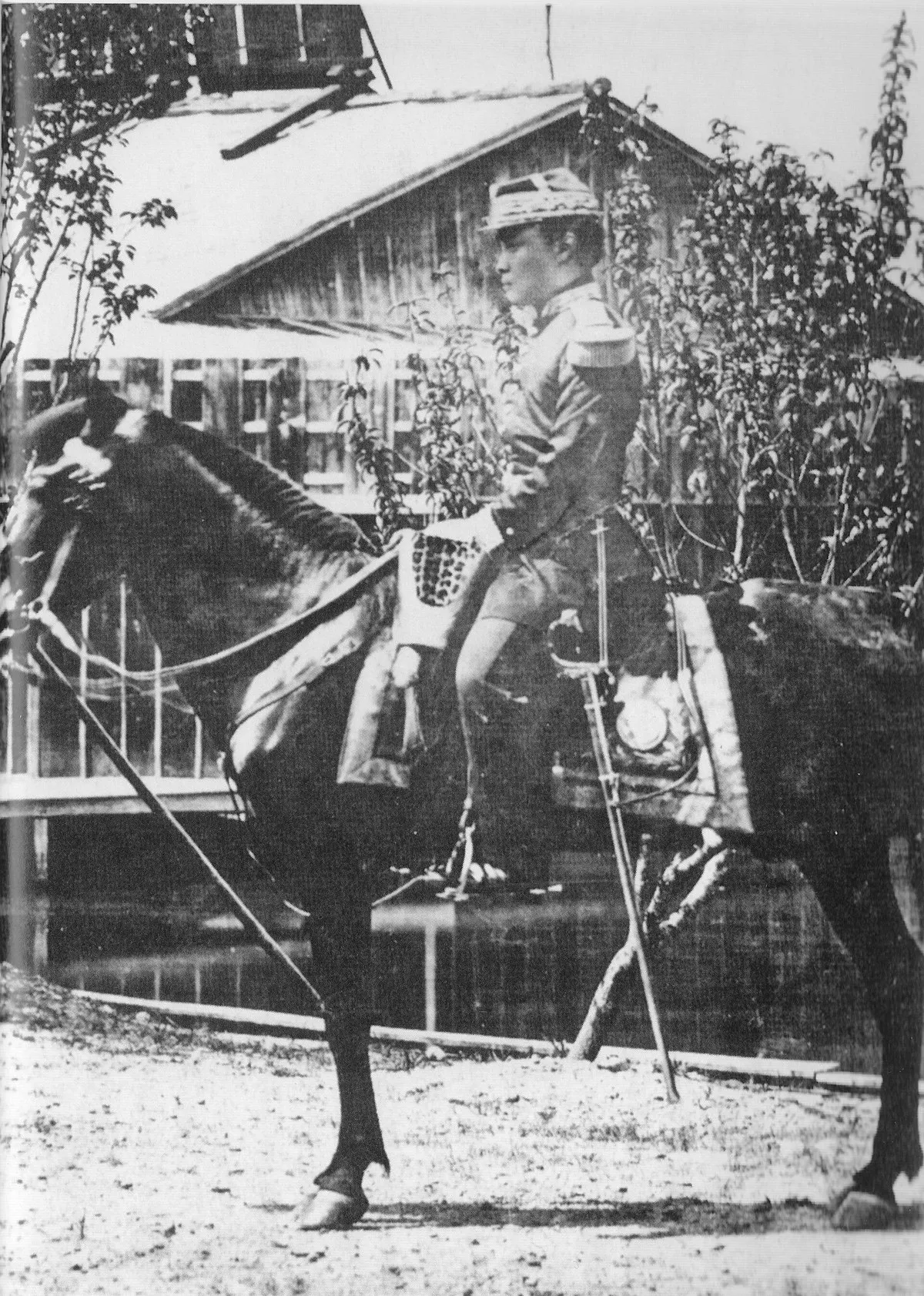
That photograph was taken the month he took the title. Run the dates of all fifteen shoguns and he is the longest-lived of them by eight years — he was seventy-six when he died in 1913, with the telephone and the railway and the Russo-Japanese War all behind him. Ieyasu, the next oldest, managed seventy-three and died in 1616.
So the interesting thing about Yoshinobu is not the ten months. It is that a man who had been the military ruler of Japan spent the next three decades in a provincial town taking photographs, and that almost nobody goes to see where.
Part 1 — Nijo Castle, and the room it did not happen in
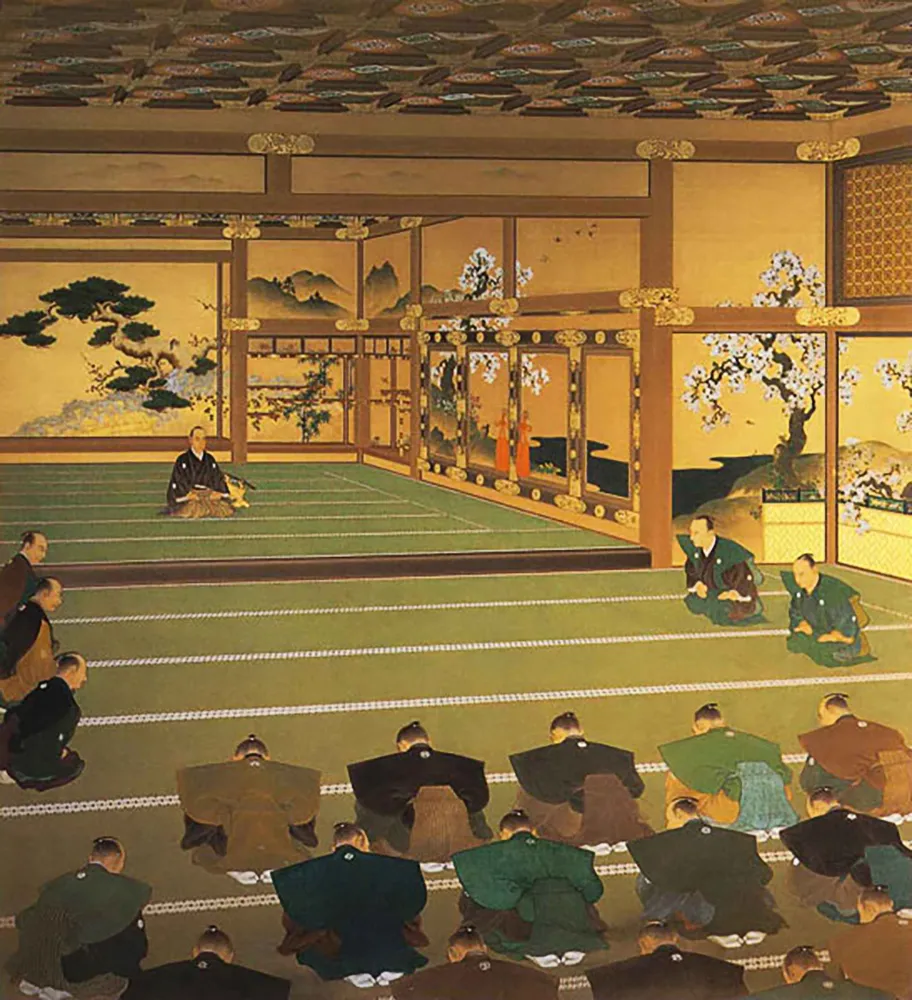
This is the picture of the taisei hokan — the return of power — and it is in every Japanese textbook. Nijo Castle has staged the scene in its Ohiroma with figures on the tatami, and that is where visitors are taken and told it happened.
The painting is not of the Ohiroma. Its own catalogue entry, at the Meiji Memorial Picture Gallery it was painted for, places it in the Kuroshoin — a smaller, darker room further into the same palace — and the scene it shows is 12 October 1867, when Yoshinobu told his own officials and the related daimyo what he intended to do.
What happened in the Ohiroma was the next day. On 13 October some fifty senior retainers of about forty domains were summoned to Nijo at noon and put the question. And here the record gets more awkward still: Tokugawa Yoshinobu ko den, his own official biography, has the senior councillor Itakura Katsukiyo presiding over that assembly rather than Yoshinobu, with six men — Goto Shojiro and Fukuoka Takachika of Tosa, Komatsu Tatewaki of Satsuma, and one each from Aki, Uwajima and Bizen — granted an audience with the shogun afterwards.
The memorial went to the court on the 14th. Assent came back on the 15th.
Nijo Castle 二条城
Kyoto, kyoto
The Ninomaru palace entire — thirty-three rooms of it, original, with Kano school paintings on the walls — including both the Ohiroma where the domains' senior retainers were assembled on 13 October 1867 and the Kuroshoin where Yoshinobu had told his own officials the day before. A World Heritage site and the only place on this route where the rooms themselves survive.
Getting there: Nijojo-mae station on the Tozai subway line, directly outside. Open 8:45 to 16:00, last entry, with the gates closing at 17:00. Eight hundred yen for the grounds; thirteen hundred including the Ninomaru palace, which is the ticket you want. The Honmaru palace is a further thousand yen and needs a web reservation.
What to know first: The Ninomaru palace closes every Tuesday in January, July, August and December, and from 26 to 28 December and 1 to 3 January. The grounds stay open on those days, so it is entirely possible to pay, walk in, and find that the rooms you came for are shut. January is the month most people will want to come.
None of which makes Nijo less worth going to. The Ninomaru palace is the real thing — thirty-three rooms, original, Kano school paintings on the walls — and the visitor route runs through the Ohiroma and the Kuroshoin both. You can stand in the room where it was announced and then in the room where it was decided, which is better than standing in one and being told it was the other.
Check the day before you book. The Ninomaru palace shuts every Tuesday in January, July, August and December. The grounds stay open, so you can pay, walk in, and find the palace closed. January is exactly when most people will want to come.
Part 2 — Shizuoka, where he went instead
He surrendered Edo in the spring of 1868, went to Mito, and was moved to Shizuoka that summer. His first address there was not a house.
Hodai-in 宝台院
Shizuoka, shizuoka
The Tokugawa family temple where Yoshinobu spent his first year in Shizuoka under house arrest, from the summer of 1868. It also holds the grave of Saigo-no-Tsubone, Ieyasu's consort and the mother of the second shogun, which the city lists as an important cultural property.
Getting there: Eight minutes on foot from JR Shizuoka Station, at 2-13-2 Tokiwacho. Free parking for worshippers. About 3.5km from the Shizuoka interchange.
What to know first: A working temple rather than a museum, and it does not publish visiting hours. The hall is open to people who come to pray; for anything more specific the temple office is 054-252-1090.
Hodai-in is a Tokugawa family temple, and the room made for him in the priests’ quarters is where the last shogun spent roughly a year under confinement. It holds the grave of Saigo-no-Tsubone as well — Ieyasu’s consort, mother of the second shogun — so the temple bookends the dynasty at both ends in one small compound eight minutes from the station.
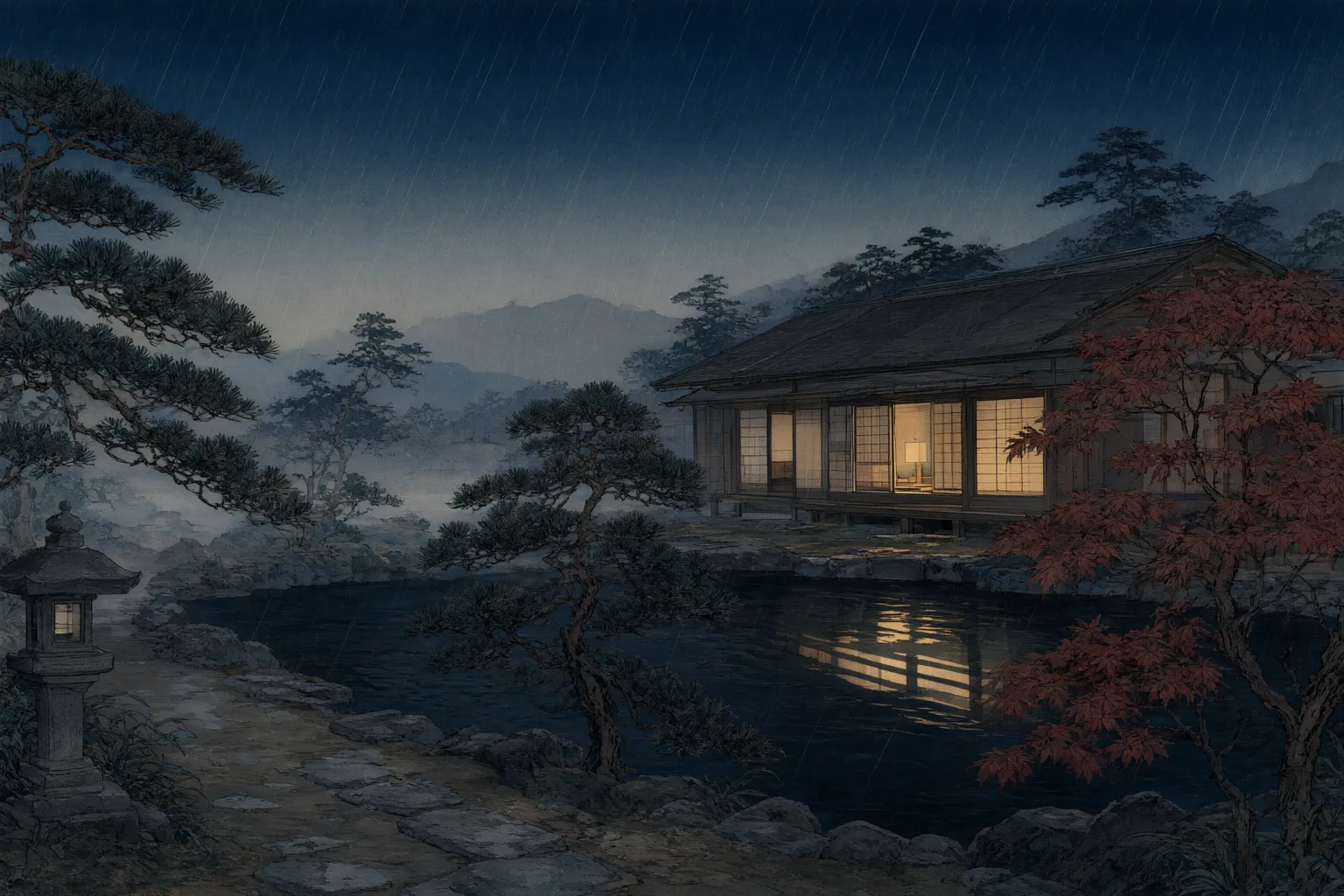
From 1869 he was a private citizen in a provincial city, and he stayed one for twenty-eight years. He photographed, which was an expensive and difficult hobby in the 1870s and which he was good at. He painted in oils, hunted, and rode one of the first bicycles in the city.
Fugetsuro 浮月楼
Shizuoka, shizuoka
The garden of the house the last shogun is said to have lived in for his first twenty years out of power, a pond-and-circuit garden of about seven thousand square metres, attributed to Ogawa Jihei, the Kyoto gardener behind Murin-an. Registered as a national monument in 2025. The buildings around it are a working restaurant and are themselves registered properties.
Getting there: Three minutes on foot from the north exit of JR Shizuoka Station, at 11-1 Konyamachi. The premises are open 10:00 to 21:00, telephone enquiries to 19:00.
What to know first: This is a ryotei, not a public garden. The official site does not publish a garden admission, and what the Japanese press describes is guests seeing the garden while eating — lunch from around four thousand yen. Ring before you go rather than turning up expecting a ticket window.
The pond garden at Fugetsuro is the physical survival of those years, and the restaurant that owns it was registered as a national monument in 2025. Be clear about what it is, though: a working ryotei, not a public garden. The official site publishes opening hours and no admission price, and the way Japanese press describes it is guests seeing the garden while they eat. Ring first.
He left in November 1897 for Tokyo, and the reason given in the local record is wonderfully undignified for a former shogun: the land his Shizuoka house stood on was wanted for a railway station yard.
Part 3 — Mito, where he started
Kodokan 弘道館
Mito, ibaraki
The domain academy of Mito, where Yoshinobu was schooled as a boy and to which he returned in 1868 to sit out the war under his own confinement. The main hall, the main gate and the Shizendo — the room he was held in — survive as important cultural properties.
Getting there: Eight minutes on foot from Mito Station north exit. Four hundred and twenty yen. Open 9:00 to 17:00 from late February to the end of September, and to 16:30 through the winter; closed 29 to 31 December.
What to know first: Sources disagree on the exact day the winter closing time changes, some giving 10 February and some 19 February. If you are coming in that fortnight, assume 16:30 and arrive early.
He was born in Mito in 1837, a son of the Mito branch, and was schooled at the domain academy before being adopted into the Hitotsubashi house. When Edo surrendered in 1868 he came back here and confined himself in the Shizendo, which still stands and which you can walk into. A man sitting out the end of his own war in his old schoolroom is as neat a thing as this route offers.
Mito is a day out of Tokyo rather than part of the Shizuoka route — about an hour and twenty on the Joban line. Kairakuen, one of the three great gardens, is twenty minutes further on and was built by his father.
Part 4 — Fact and legend
Documented, and the thing he is least forgiven for. At Toba-Fushimi in January 1868 his army was fighting and losing, and he left it. He went aboard ship at Osaka and sailed for Edo, and the men in the field learned their commander had gone when he had already gone. Whatever the taisei hokan was meant to achieve ended there, ten weeks after the court accepted it.
Documented: the Shinto funeral. He asked to be buried in the Shinto manner rather than the Buddhist, which is why his grave in the Kan’ei-ji ground at Yanaka is a round earth mound like an imperial one and not a stone pagoda like the other shoguns’ at Zojo-ji and Kan’ei-ji. The usual explanation is gratitude to the Meiji emperor, who made him a prince in 1902.
Before you plan a visit to that grave, read this. The Tokugawa plot is a large enclosure of its own inside the Yanaka cemetery, and at least one Japanese source states plainly that it is not open to the public. Plenty of visitors describe having seen it from outside. I could not establish which is true, so do not build a trip around it — the cemetery office is 03-3821-4456 and is the right place to ask.
Retold everywhere: the shogun who handed power back. He did, and the phrase flatters him. Handing the office back was a manoeuvre, and a shrewd one: with no shogunate to abolish, the domains pressing for one had nothing to push against, and the Tokugawa — the largest landholder in Japan by far — would have been the heaviest presence in whatever council came next. It was an attempt to keep the family’s power by giving up its title. It failed in under three months.
Disputed, and worth knowing before you are shown the room: whether Yoshinobu was in the Ohiroma at all on the 13th. His own official biography says the councillors put the question and he received six men afterwards. The mannequins say otherwise.
Part 5 — The route, honestly
This is not one trip, and guides that string it together are selling you a week in a car.
Shizuoka is the one that works as a weekend. Hodai-in and Fugetsuro are both within ten minutes of Shizuoka Station, and they pair naturally with Sunpu Castle Park and Kunozan from the Ieyasu route — the same city, two Tokugawa at opposite ends of the line. Shizuoka to Atami is about forty minutes on the Tokaido line, and Atami to Tokyo is fifty on the Shinkansen.
Nijo belongs to a Kyoto trip. Mito belongs to a day out of Tokyo.
Check rooms in Atami for your dates
Before you go
Nijo Castle: last entry 16:00, gates close 17:00. Eight hundred yen for the grounds, thirteen hundred with the Ninomaru palace — buy the thirteen hundred, the rooms are the reason to come. The Honmaru palace is a further thousand and needs a web booking. Ninomaru shuts on Tuesdays in January, July, August and December, and over the new year.
Kodokan in Mito: four hundred and twenty yen, 9:00 to 17:00 from late February to the end of September and to 16:30 in winter, closed 29 to 31 December. Sources disagree on whether the winter closing time ends on 10 or 19 February, so in that fortnight assume the earlier one.
Hodai-in does not publish hours; it is a working temple and the hall is open to people who come to pray. Fugetsuro is open 10:00 to 21:00 as a restaurant, and the garden goes with a meal rather than a ticket.
Atami is the easiest base on this site to book in English and the easiest to get wrong — a resort town that boomed, emptied and is filling again, so the range runs from genuinely good ryokan to tired concrete. The three below are picked from what is bookable, with the reasons given.
Where to Stay: Atami Onsen
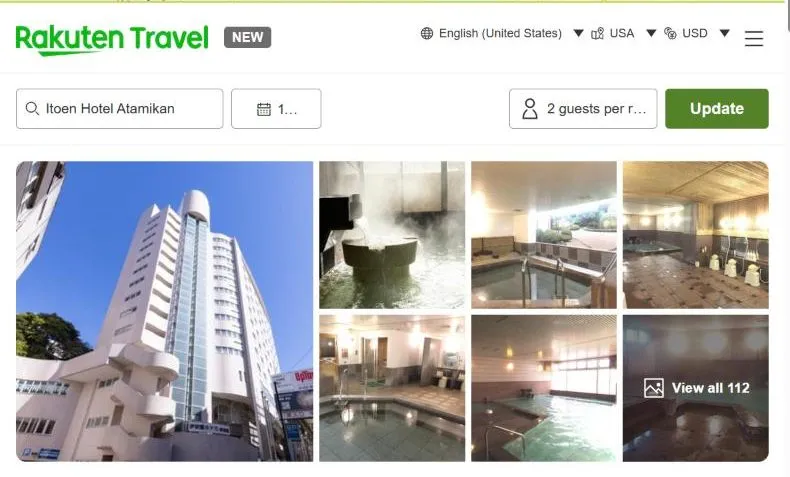 Itoen Hotel Atamikanfrom $100
The value pick, and the only one of these you can walk to with a bag. A big old hot-spring hotel rather than a ryokan, scored 3.5 across a hundred and forty-nine reviews, at a price that makes Atami look like the bargain it stopped being decades ago.
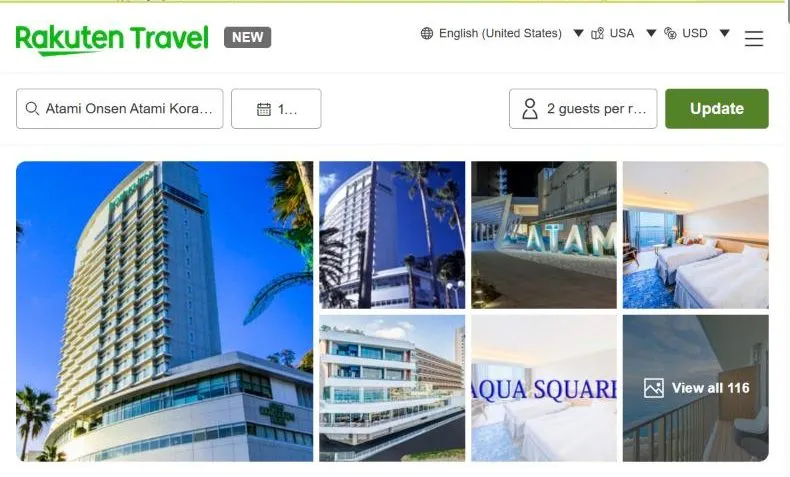 Atami Korakuen Hotelfrom $393
The safe large-hotel choice: 4.4 across a hundred and sixty-one reviews, sea-facing, breakfast included. Twenty-four minutes on foot from Kinomiya, so plan on a taxi from Atami Station.
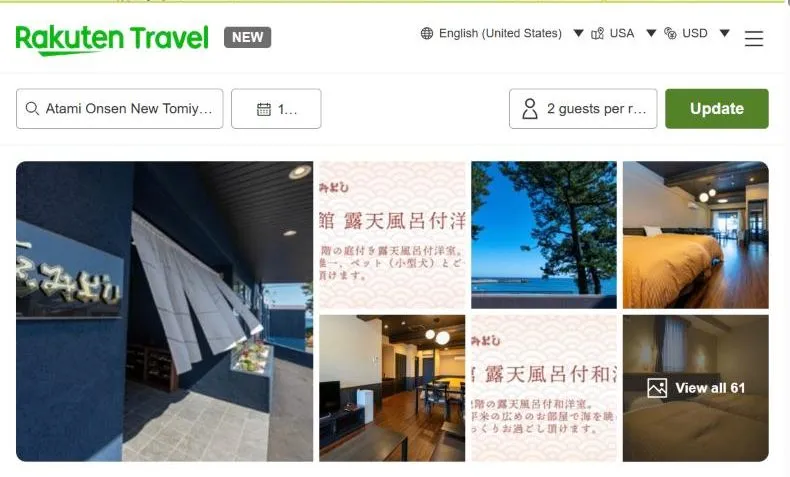 New Tomiyoshifrom $425
The best-evidenced score in Atami — 4.7 from two hundred and eighty-three reviews — and the one to book if the bath is the reason for the trip. Izu-Taga is a stop down the line from Atami, which is why it is quieter.
Inn images are screenshots of each inn's own page on Rakuten Travel, captured 2026-10-27. The photographs in them belong to the inns; pages and prices change.
The other 3 inns in Atami Onsen
Prices are the lowest seen for two people, one night, on 2026-12-11, checked 2026-10-26. They move with the date — treat them as a rough floor, not a quote. Japanese inns are listed under romanised names that often differ from the signs outside them, so these link straight to the inn rather than to a search. What the booking page looks like.
See what is available in Atami Onsen
6 inns were bookable in English on the date checked. Availability shifts: a check four months earlier returned a partly different list, so this is what was open then rather than a fixed roster. Availability moves quickly at smaller inns, and weekends book out first.