Saigo Takamori and the Satsuma Rebellion
A cave on a hill above Kagoshima, and the face nobody ever photographed
Saigo Takamori commanded the army that took Edo in 1868, sat in the government that replaced the shogunate, walked out of it in 1873, and in 1877 died on a hillside in his own city fighting the state he had made.
Twelve years later that state pardoned him. In 1898 it put a bronze of him in Ueno Park. Japan has never quite decided what he was, and Kagoshima never had to: here he is simply Sego-don, and the hill he died on is in the middle of the view from everywhere.
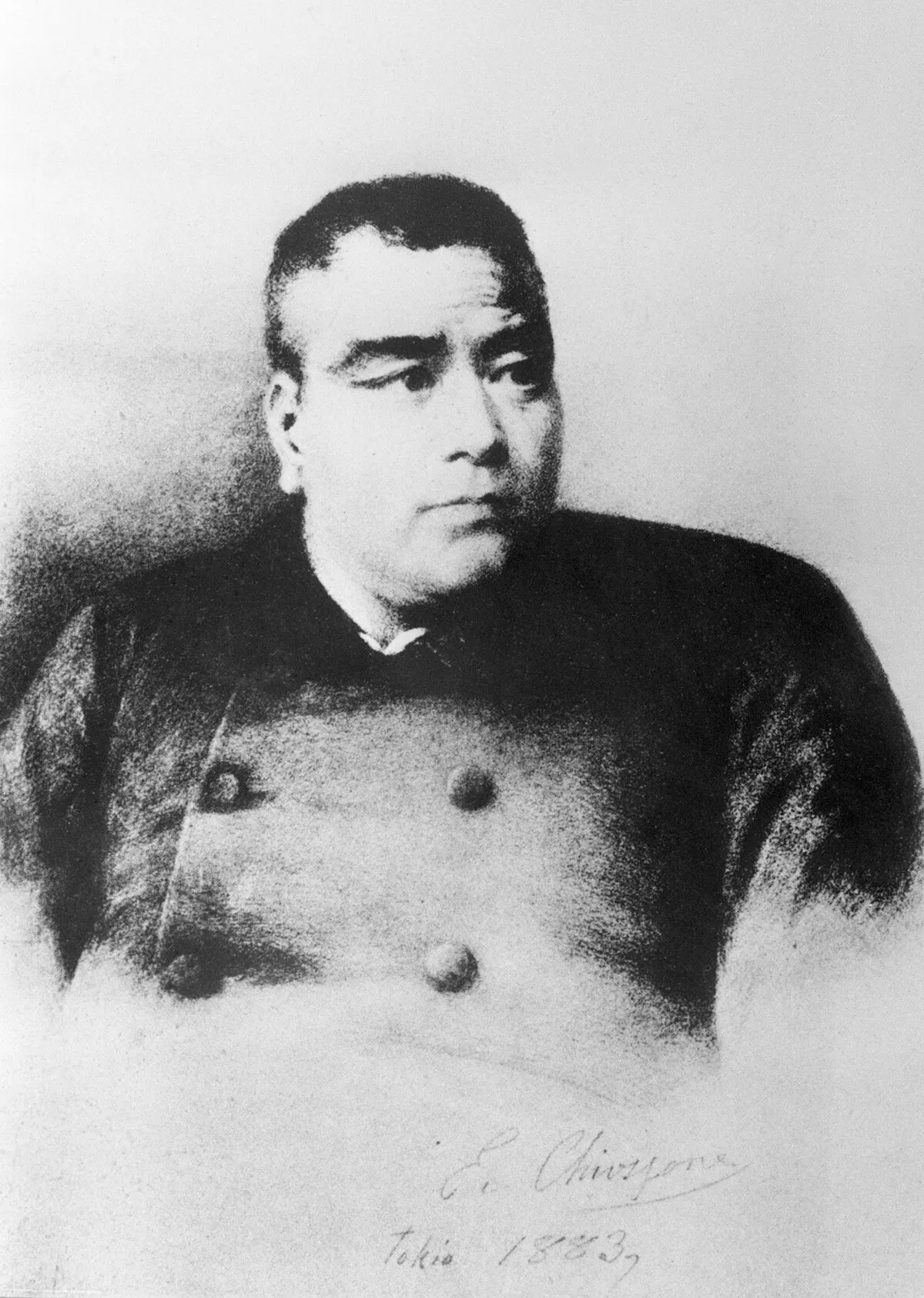
Look at that picture, because it is the strangest thing in this article. Saigo lived until 1877, had every opportunity to be photographed, and was not — his son Kikujiro said flatly that his father never once sat for a camera. Every other man of his generation in government is photographed repeatedly. Saigo is not photographed at all.
So the face on the ten-thousand-yen reproductions, on the statue, on the posters for the drama, is this: a conté drawing signed E. Chiossone, Tokio 1883, made six years after he died by an Italian engraver at the government mint who had never met him. The usual account is that Chiossone built it from the features of Saigo’s younger brother Judo and his cousin Oyama Iwao.
It is the one portrait on this site that is an invention, and it is the most famous face in the whole collection.
Part 1 — Where the war started
Site of the Shigakko 私学校跡
Kagoshima, kagoshima
A gate and a stone wall, standing where the stables of Tsurumaru used to be. Saigo founded the school here after walking out of the government in 1873, and it was its students raiding the government arsenal in January 1877 that started the war. The wall is pitted with bullet strikes from the end of it.
Getting there: Satsuma Gishi-hi mae on the Kagoshima City View bus from Kagoshima-Chuo, then a few steps. Free, outdoors, always there. The stonework around the Gorōmon gate of the castle next door carries the same marks and is a prefectural historic site for them.
Saigo came home in 1873 after losing an argument in cabinet about Korea, and opened a school. The Shigakko took the young ex-samurai of Satsuma — men the new order had just abolished, with pensions commuted and swords banned — and gave them somewhere to be.
In January 1877 the government moved to take the arsenal’s weapons out of Kagoshima by ship. The students got there first and raided it. Saigo had not ordered it and by every account was not even in the city, but it was his school, and that was that.
Tsurumaru Castle Site 鶴丸城跡(御楼門)
Kagoshima, kagoshima
The moat and the stone walls, and the Goromon gate, rebuilt in 2020 at the scale of the original. The prefectural museum stands inside the grounds.
Getting there: Central Kagoshima, walkable from the city tram.
What to know first: The buildings burned in 1873 and the gate is only a few years old. The castle was always a low walled residence rather than a tower, which is the point: the Shimazu held Satsuma without needing one.
The wall of the school still stands, pitted where the bullets hit it at the end, and the castle stonework next door carries the same marks — the Shimazu had held this province for seven hundred years, and the war that finished their old retainers was fought across their front gate.
Part 2 — Shiroyama
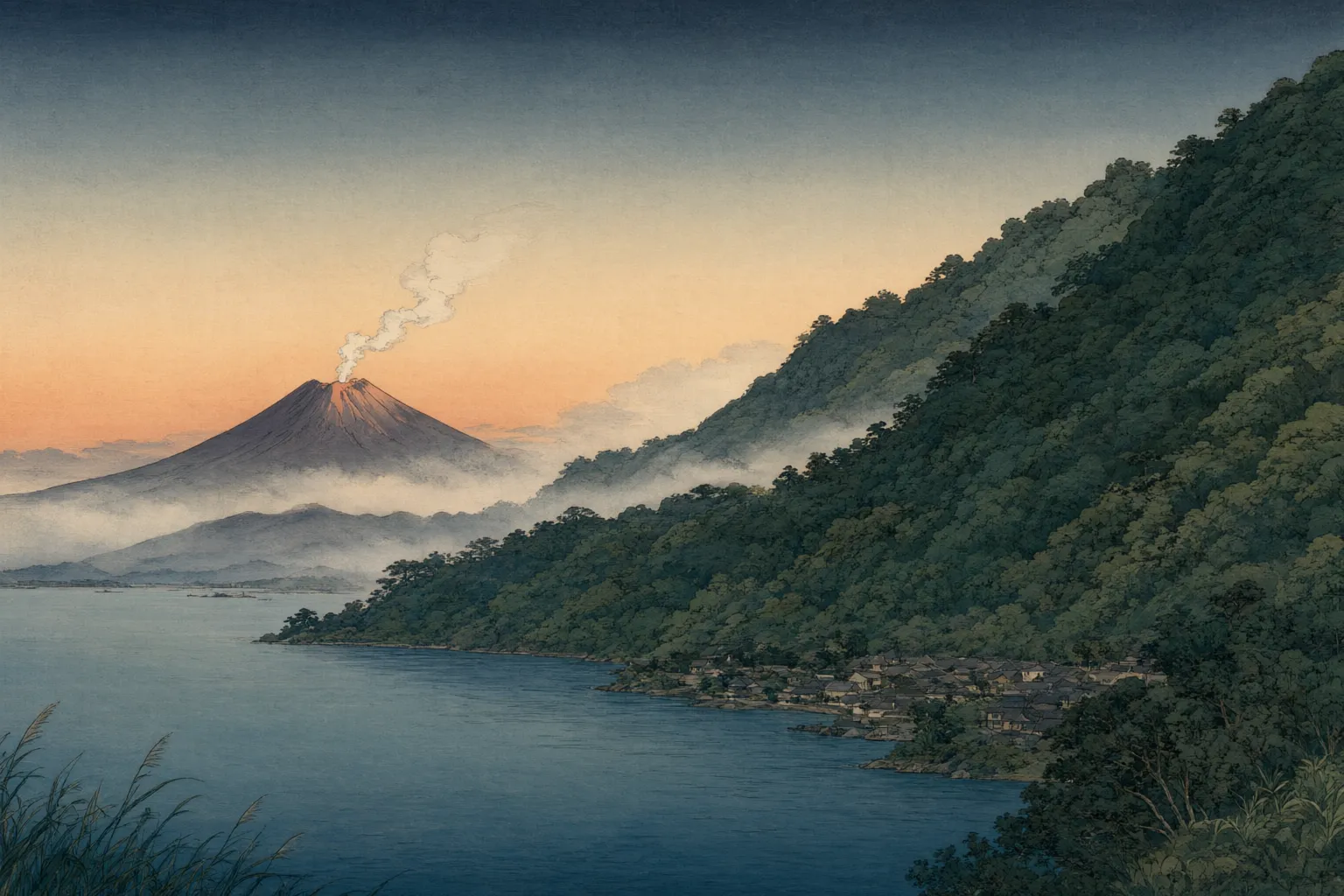
The campaign went north, failed at Kumamoto Castle, and came back. By September 1877 what was left of the Satsuma army — a few hundred men against some thirty thousand — was on the hill behind the city.
Shiroyama 城山
Kagoshima, kagoshima
The wooded hill the Satsuma army retreated into, with the cave Saigo spent his last five days in — four metres deep, three wide, the entrance about head height — the spot in the Iwasaki valley where he was hit on the morning of 24 September 1877 and died by his own hand with Beppu Shinsuke as his second, and a lookout at 107 metres with the city, Kinko Bay and Sakurajima laid out below it. The walking paths are a national historic site and natural monument.
Getting there: Saigo Dokutsu-mae on the City View bus, about eighteen minutes from Kagoshima-Chuo, for the cave; Shiroyama for the lookout. All of it is free and open. The lookout has free parking for about forty-six cars; the cave has none.
Saigo spent his last five days in a cave on that hill. It is still there and you can walk to it: four metres deep, three across, a mouth about the height of a man. There is nothing in it. That is rather the point.
On the morning of 24 September the government army attacked, Saigo was hit coming down the Iwasaki valley, and he died there with Beppu Shinsuke as his second. The spot is marked. Ten minutes’ walk above it, the lookout gives you the city, the bay and Sakurajima — the view the Shimazu built a garden to borrow, and the last thing the rebellion had.
Part 3 — The graves
Nanshu Cemetery 南洲墓地
Kagoshima, kagoshima
Saigo's grave on a hillside above the bay, with Kirino Toshiaki, Murata Shinpachi and the rest of the Satsuma dead around him — 749 stones for something over two thousand men. The shrine beside it was founded in 1880, three years after the government had him killed as a traitor, and the city's memorial hall stands at the western edge.
Getting there: Nanshu Koen-iriguchi or Kenshokan-mae on the City View bus, about twenty-six minutes from Kagoshima-Chuo. The cemetery and shrine are free and open; the memorial hall is 9:00 to 17:00 with last entry 16:40, closed Mondays — the next weekday when that is a holiday — and 29 December to 1 January.
What to know first: From the bus stop it is about a hundred steps up, which the city's own page warns about. And the memorial hall's admission is quoted as four hundred yen on its own site and two hundred on most listings; take the higher figure and be pleased if it is less.
Seven hundred and forty-nine stones for something over two thousand men, on a slope above the bay, with Saigo in the middle and Kirino Toshiaki and Murata Shinpachi beside him.
The shrine next to the cemetery was founded in 1880 — three years after the government had killed him as a traitor and twelve before it pardoned him. Work out what that means about how the pardon actually happened and you have understood something about the Meiji state that the textbooks say more slowly.
Check rooms in Kagoshima for your dates
Part 4 — Fact and legend
Documented: there is no photograph. Not a lost one, not a disputed one. His son said he never sat for one. Every image of his face postdates his death.
Documented: he did not start the war. The arsenal raid was his students’ and he was not in Kagoshima for it. He took command afterwards, which is a different decision and the one he can be judged on.
Documented, and the part that undoes the legend: he was not fighting for the old order. Saigo had abolished it. He had led the army that ended the shogunate, sat in the government that dissolved the domains, and signed the measures that stripped his own class of its pensions and its swords. The rebellion was by men he had helped disinherit, led by one of the people who disinherited them.
Retold, and softer than the record: “the last samurai”. The film is a film. The Satsuma army had artillery and rifles and used them; the romance of men with swords against a modern army is a later overlay on a war fought mostly with firearms by both sides.
Not settled: how he died. Seppuku with Beppu Shinsuke as second is the standard account and the one the marker on the hill gives. Some sources argue that the bullet had already made the formal act impossible and that what happened was simpler. The hill does not tell you.
Part 5 — The route
All four places are in Kagoshima and all four are on the City View loop bus. Nanshu first, then Shiroyama — the cemetery is on the north side of the same hill — then down to the Shigakko wall and the castle, which puts you back in the middle of town for the evening.
That is most of a day. If you have two, the second one is the Shimazu: Sengan-en and the Shuseikan are forty minutes up the coast and are the other half of why Satsuma mattered.
Before you go
The cave, the place he died, the lookout, the Shigakko wall and the cemetery are all free and all outdoors. There is no ticket to any of it.
The Saigo Nanshu Memorial Hall by the cemetery is open 9:00 to 17:00, last entry 16:40, closed Mondays — the following weekday when the Monday is a holiday — and from 29 December to 1 January. Its own site says four hundred yen; most listings say two hundred. Take four hundred.
From the bus stop to the cemetery is about a hundred steps up, which the city says plainly and most guides do not. The lookout has free parking; the cave has none at all.
Kagoshima has sixty-five properties bookable in English, which is the second deepest list on this site, and they are city hotels rather than ryokan — the water is under the pavement here, not in a village of inns. The three below are picked from what is bookable.
Where to Stay: Kagoshima
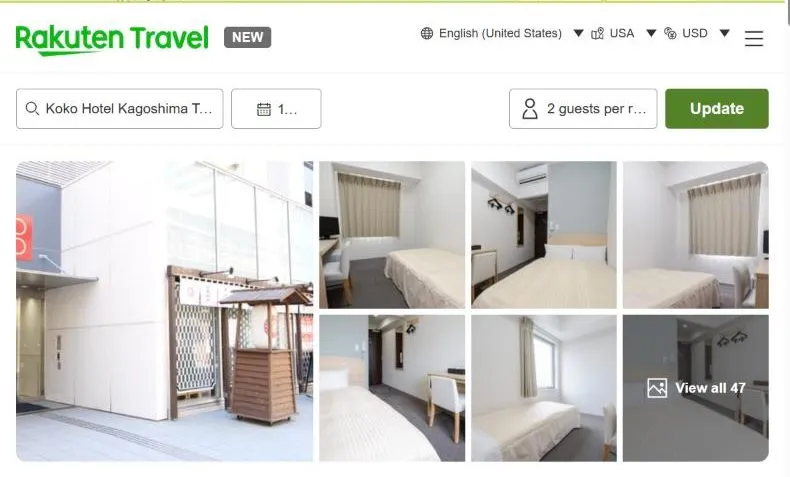 Koko Hotel Kagoshima Tenmonkanfrom $43
The value pick and the cheapest decent bed on this entire site: 4.1 across eighty-six reviews, in Tenmonkan, which is the part of town you want to walk out into in the evening.
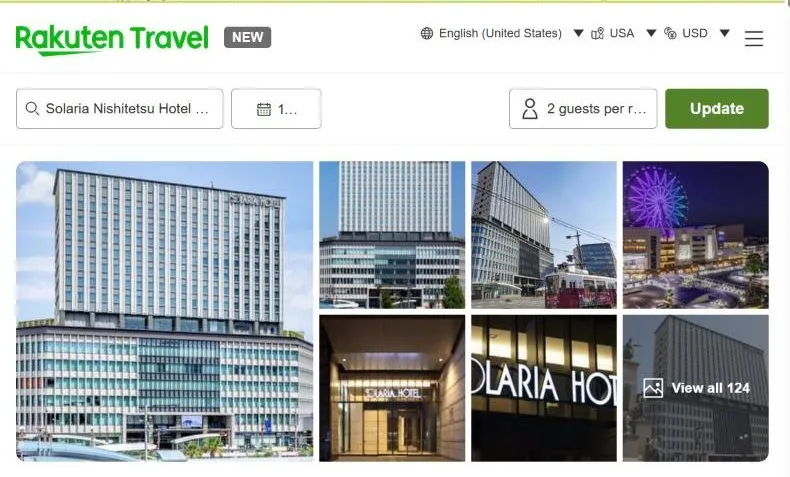 Solaria Nishitetsu Hotel Kagoshimafrom $131
The middle of the range and the firmest numbers in it: 4.4 across eighty-four reviews, a short walk from the tram and from Tenmonkan.
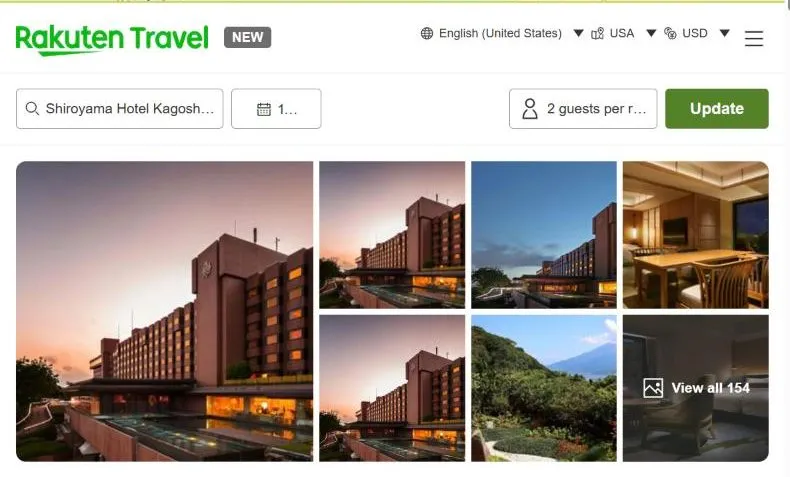 Shiroyama Hotel Kagoshimafrom $444
The splurge, and the one with the view the whole city is about: it stands on the hill where the Satsuma Rebellion ended, looking straight across the bay at Sakurajima, and its open-air bath looks at the volcano. 4.6 from a hundred and three reviews.
Inn images are screenshots of each inn's own page on Rakuten Travel, captured 2026-10-27. The photographs in them belong to the inns; pages and prices change.
The other 3 inns in Kagoshima
Prices are the lowest seen for two people, one night, on 2026-12-11, checked 2026-10-26. They move with the date — treat them as a rough floor, not a quote. Japanese inns are listed under romanised names that often differ from the signs outside them, so these link straight to the inn rather than to a search. What the booking page looks like.
See what is available in Kagoshima
6 inns were bookable in English on the date checked. Availability shifts: a check four months earlier returned a partly different list, so this is what was open then rather than a fixed roster. Availability moves quickly at smaller inns, and weekends book out first.