Katsu Kaishu: The Man Who Talked a City Out of Burning
A stone on a pavement in Minato, and a grave at Senzoku-ike with his enemy beside it
In March 1868 the government army was outside Edo and intended to take it by assault. The city held perhaps a million people. Katsu Kaishu went to meet the commander of that army, and three weeks later the castle was handed over without a shot.
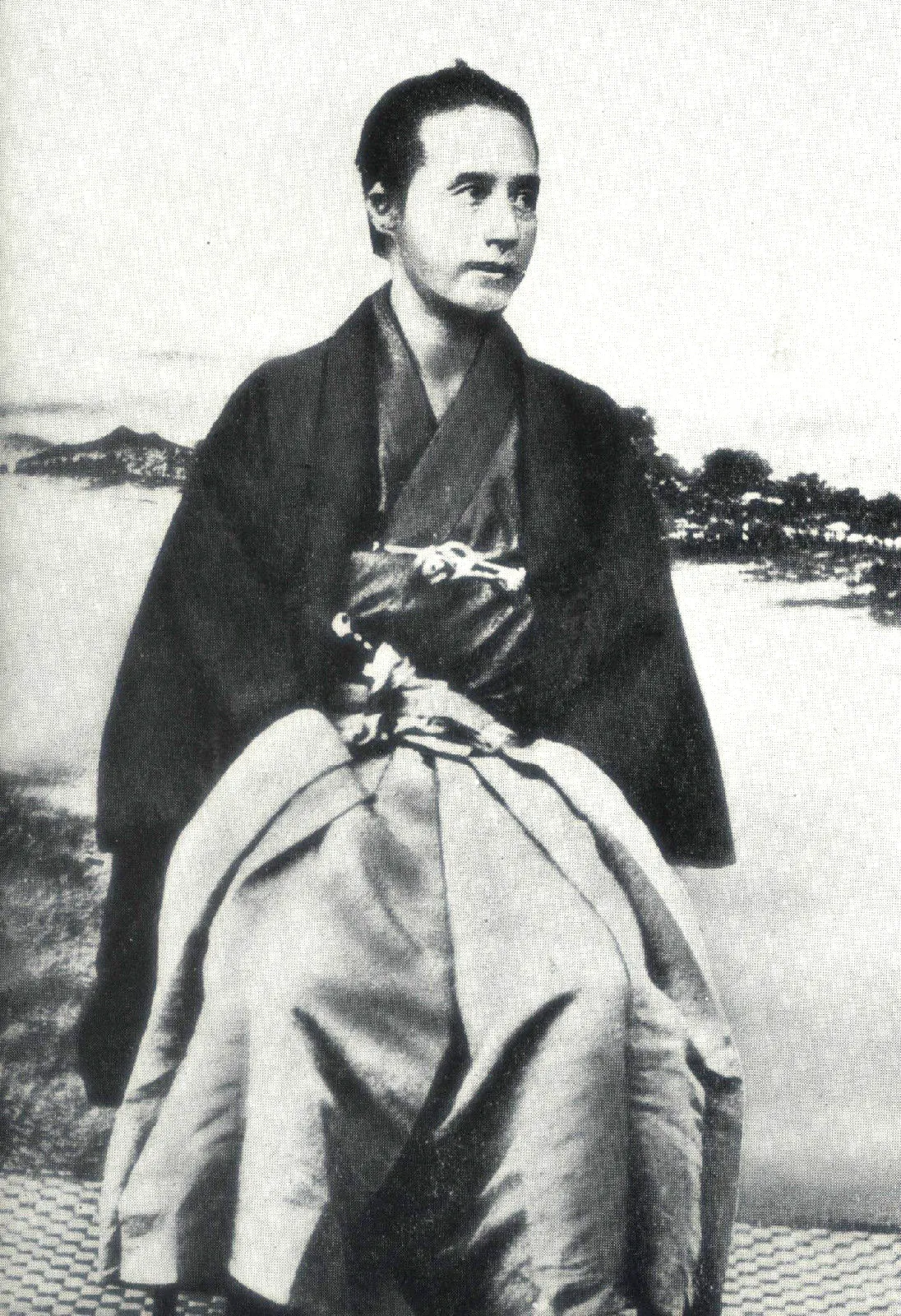
That is the thing he is for. Everything else about him — the first Japanese to cross the Pacific under sail in a Japanese ship, the founder of the shogunate’s navy, Sakamoto Ryoma’s teacher — is prelude to an afternoon of talking.
A warning before you plan anything. Both places below are in Tokyo, one of them is a stone on a pavement, and neither will take you more than an hour. This is the shortest guide on this site and the only one with no hot spring at the end of it, because Katsu does not have a route. He has a city.
Part 1 — The pavement in Shiba
Site of the Edo surrender talks 江戸開城西郷南洲勝海舟会見之地
Minato, Tokyo, tokyo
A stone on a pavement. It marks where Katsu met Saigo on 14 March 1868 and talked him out of storming a city of a million people. The Satsuma warehouse residence that stood here is long gone and the ground is office blocks. The stone was put up in 1952 and the calligraphy on it is by Saigo Kichinosuke — Saigo Takamori's grandson.
Getting there: Three minutes north from the Mita exit of JR Tamachi Station, on the Daiichi Keihin beside Tamachi Tower; also close to the A6 exit of Mita Station on the Toei Mita line. Free, outdoors, always there.
What to know first: Which building the talks happened in is not settled — the Tamachi warehouse residence and the Takanawa lower residence are both argued for, and the Satsuma upper residence here had been burned down the previous winter. Visitors have also reported the stone fenced off behind construction hoarding. It is a marker, not a site: go because you are passing, not instead of something else.
Katsu met Saigo Takamori on 14 March 1868 at a Satsuma residence by the water in Shiba. What he carried into the room was not much: a threat to burn Edo himself rather than hand it over intact, a warning about what the foreign powers would make of a sacked capital, and the fact that the two men had met before and had got on.
What he carried out was the cancellation of the assault.
The ground is office blocks now and the marker is a stone in a planting strip on the Daiichi Keihin. It was put up in 1952, and the writing on it is by Saigo Kichinosuke — Saigo Takamori’s grandson. Even which building the talks happened in is argued over.
Go because you are passing Tamachi, not instead of something else.
Part 2 — Senzoku-ike, which is worth the trip
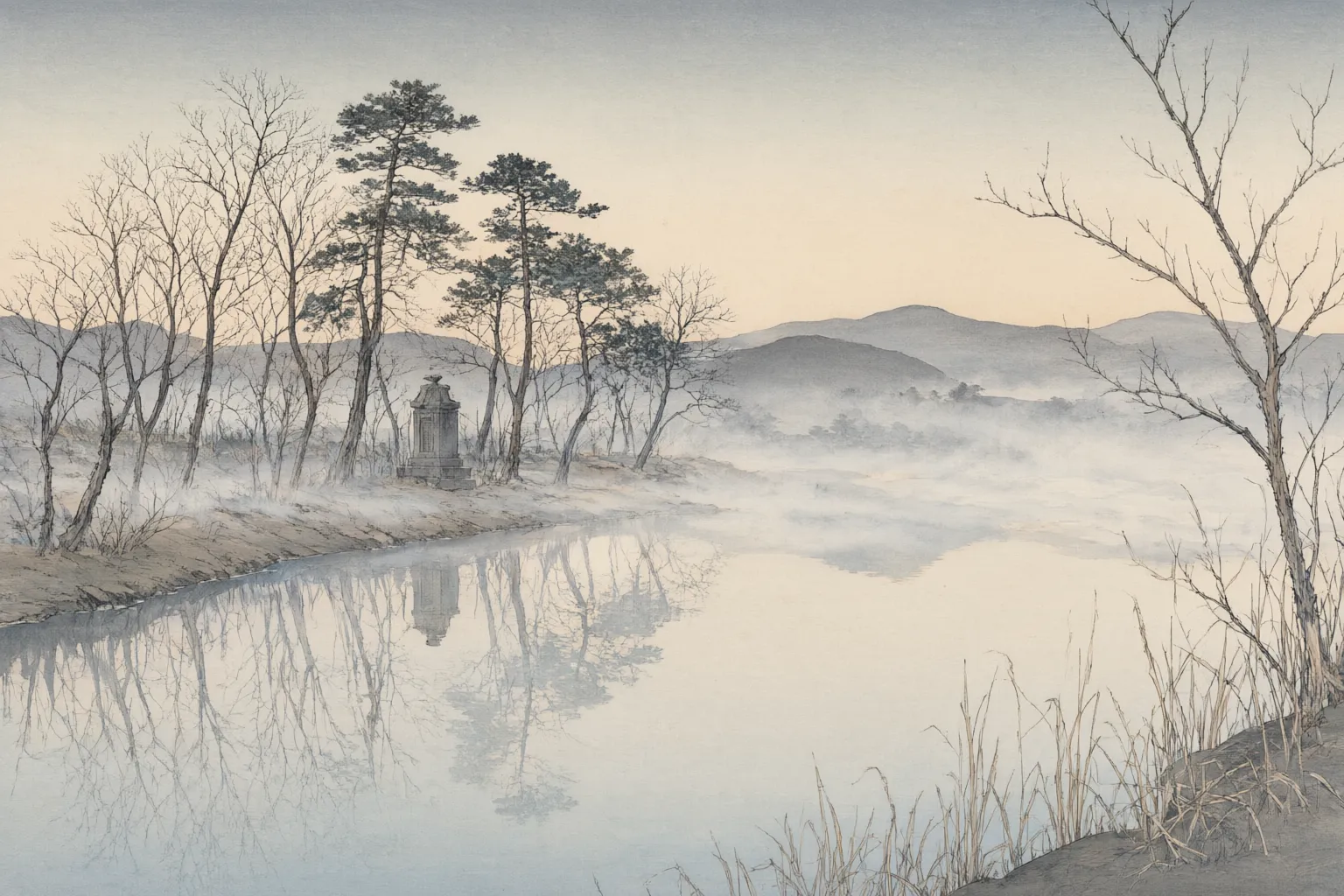
Senzoku-ike 洗足池
Ota, Tokyo, tokyo
A pond with a park round it that holds three things at once: the Ota city museum devoted to Katsu Kaishu, the graves of Katsu and his wife, and the stone Katsu put up in 1879 for Saigo Takamori — the man who had marched an army on his city, and who had died two years earlier a rebel against the government they had both helped make. It was moved here from Katsushika in 1913 and now stands beside Katsu's own grave.
Getting there: Six minutes on foot from Senzokuike Station on the Tokyu Ikegami line. The park, the graves and the monument are free and always open. The museum is at 2-3-1 Minami-senzoku, three hundred yen, 10:00 to 18:00 with last entry half an hour before, closed Mondays — the following day when the Monday is a holiday — and over the new year.
What to know first: The museum also shuts between exhibitions at short notice, and at least one ward bulletin gives last entry as 17:30 rather than 18:00. Ring 03-6425-7608 if you are making a journey for it.
Katsu liked this pond, built a villa by it, and is buried beside it with his wife Tami. The Ota city museum devoted to him is a few minutes’ walk away and costs three hundred yen.
But the reason to come is the other stone.
In 1877 Saigo Takamori led a rebellion against the Meiji government and died at Shiroyama in Kagoshima, a traitor by the state’s reckoning. In 1879 — two years later, while that verdict still stood — Katsu Kaishu put up a monument to him, carved with a poem Saigo had written in exile. It went up at a temple in Katsushika. In 1913 it was moved here.
So Katsu’s grave now has, standing next to it, the memorial he raised to the man who had marched an army on his city and then been destroyed by the government that army created. Nobody staged that. It accumulated.
Part 3 — Fact and legend
Documented: he threatened to burn Edo. The argument he made to Saigo included the shogunate’s own plan to fire the city rather than let it be taken — which is a strange thing to be remembered for saving a city with, and is the part the civic version leaves out.
Documented: the monument, and the date. Erected 1879, two years after Saigo died in rebellion; moved to Senzoku-ike in 1913.
Not settled: the room. The Tamachi warehouse residence is the usual answer; the Takanawa lower residence is argued for too. The Satsuma upper residence that had stood nearby had been burned down the previous winter, so wherever they met, it was not there.
Worth correcting, because the taiga will raise it: Katsu and Oguri Tadamasa are routinely set up as mirror images, the diplomat and the hard-liner, and the 2027 drama casts them that way. The rivalry is real, but it was not warm and it did not end with Katsu looking after Oguri’s people. Katsu’s written verdict on him was that he had the Tokugawa in his eye and nothing else, and no clear sight of the larger situation. Oguri’s surviving family were taken in by Mitsumura Risuke, a former servant of the house.
Part 4 — Where this actually sits
Both sites are free except the museum, both are in Tokyo, and together they are a morning. The honest advice is to attach them to something else.
If you want the other half of this story, it is on two other pages here: the shogun Katsu was negotiating on behalf of, who ended up living quietly in Shizuoka for three decades, and the war that went on in the north for another year after Edo was handed over peacefully. Those two have somewhere to stay at the end of them. This one does not, and saying so is cheaper than pretending Tokyo has an onsen village.
Before you go
The Katsu Kaishu Memorial Museum is at 2-3-1 Minami-senzoku in Ota, six minutes from Senzokuike Station on the Tokyu Ikegami line. Three hundred yen, a hundred for school children. Open 10:00 to 18:00, last entry half an hour before, closed on Mondays — the next day when the Monday is a public holiday — and over the new year. It also closes between exhibitions at short notice, and one ward bulletin gives last entry as 17:30 rather than 18:00, so if you are travelling for it, ring 03-6425-7608 first.
The graves and the Saigo monument are in the park, free, and always open.
The Edo surrender marker is three minutes north of the Mita exit of Tamachi Station on the Daiichi Keihin, beside Tamachi Tower. Visitors have reported it fenced off behind construction hoarding, so it may be awkward to reach.